Cà Mau Province
Đất Mũi — the southernmost point of the country, U Minh Hạ, and the land of Bạc Liêu
Southern Vietnam · Mekong Delta
Đất Mũi — the southernmost point of the country, U Minh Hạ, and the land of Bạc Liêu
Southern Vietnam · Mekong Delta
Cà Mau province was newly formed from the merger of Cà Mau and Bạc Liêu provinces under Resolution 202/2025/QH15, officially operating from July 1, 2025. Area 7,942.39 km², population 2,606,672. Located at the southernmost point of the country, Cà Mau new is the only province bordering three seas (East Sea to the east and south, Gulf of Thailand to the west), with a coastline of over 250 km. Mũi Cà Mau in Đất Mũi commune is the southernmost point of Vietnam — the only place in the country where you can watch the sunrise over the East Sea and sunset over the Gulf of Thailand on the same day. The province has two UNESCO World Biosphere Reserves: Mũi Cà Mau and U Minh Hạ National Park. Bạc Liêu culture is famous nationwide for its đờn ca tài tử art (UNESCO heritage), the Công tử Bạc Liêu anecdotes, and the coastal wind power fields. The administrative center is in Cà Mau City.
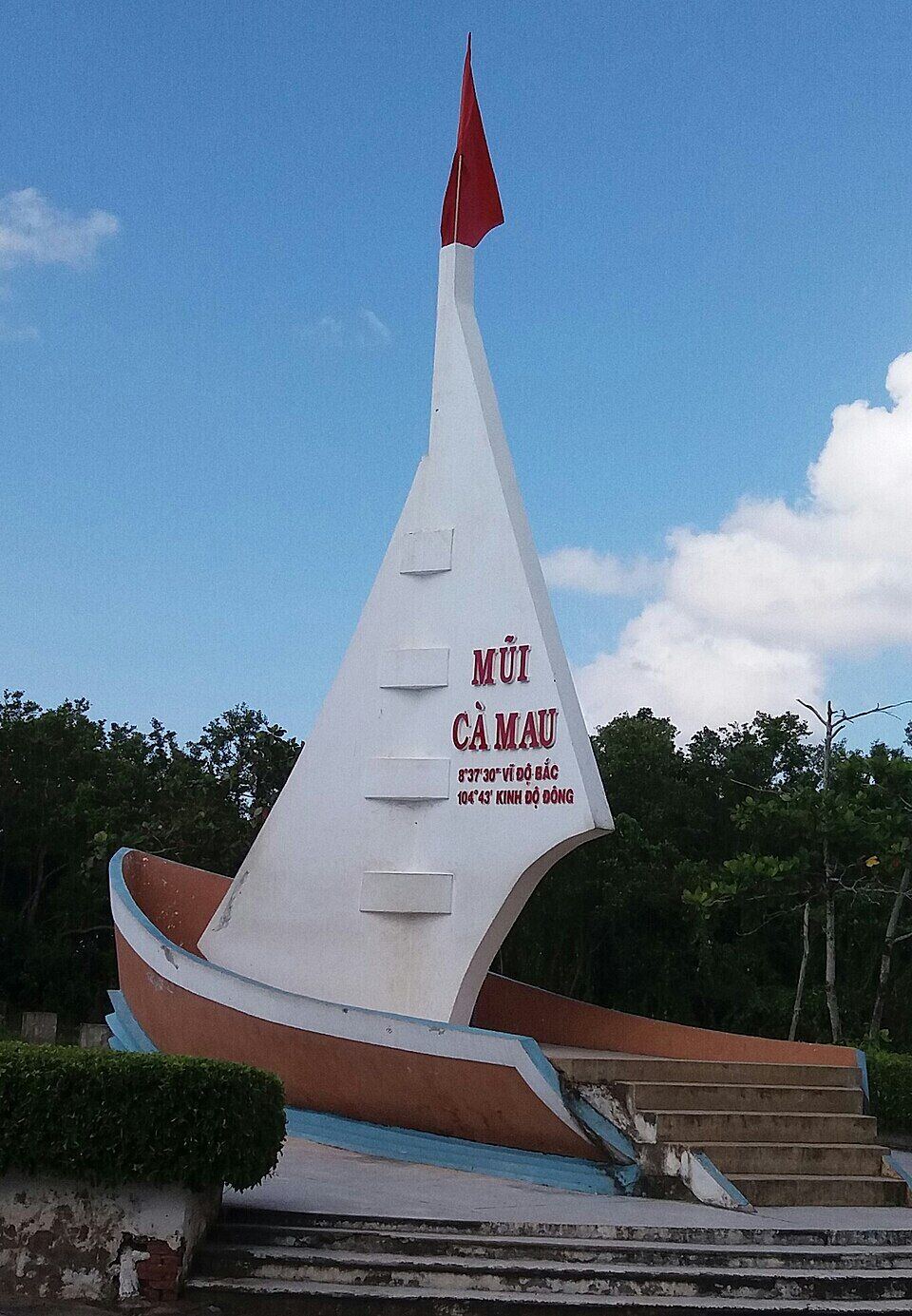
Mũi Cà Mau, located in Đất Mũi commune, Ngọc Hiển district — is the southernmost point of the Fatherland, approximately 110 km from Cà Mau city. This is the only place in Vietnam where one can witness the sunrise over the East Sea and the sunset over the Gulf of Thailand on the same day. The National GPS 0001 coordinate marker (8°37′30″ North latitude) was erected here in 1995 — a sacred symbol of Vietnam's 'Four Extremes' along with Lũng Cú, Mũi Đôi, and A Pa Chải. The area was recognized as a World Biosphere Reserve in 2009 with its pristine mangrove ecosystem — the Cà Mau mangrove forest is one of the largest mangrove forests in Southeast Asia. Notably, Đất Mũi is still expanding into the sea by about 50–80 m each year due to alluvial deposits — a rare phenomenon in the world.
Things to do: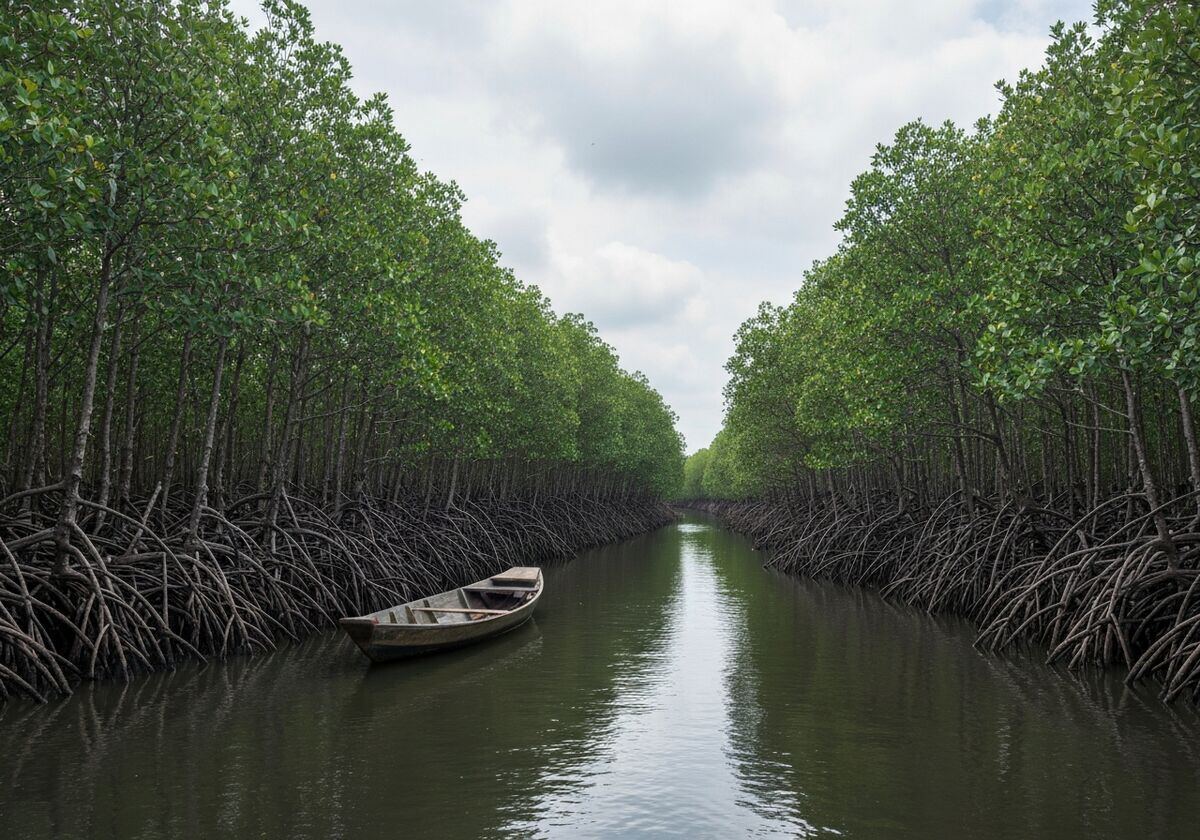
U Minh Hạ National Park covers over 8,500 hectares, stretching across U Minh and Trần Văn Thời districts (former Cà Mau). This is an ancient melaleuca forest on peatland — a rare and special habitat globally, recognized as the core area of the Mũi Cà Mau Biosphere Reserve (UNESCO 2009). It boasts a rich flora and fauna with over 175 bird species, notably the Sarus Crane, Greater Adjutant, and many unique freshwater fish species. Visitors can take a 'vỏ lãi' (small boat) through canals winding through the melaleuca forest, birdwatching, freshwater fishing, and enjoying grilled snakehead fish ('cá lóc nướng trui') and fermented fish hotpot ('lẩu mắm') — signature dishes of the U Minh region. Harvesting melaleuca forest honey is also an interesting experience — U Minh honey has a special flavor from the melaleuca flowers. This land is associated with the anecdotes of writer Sơn Nam in 'Hương rừng Cà Mau'.
Things to do:
The Hòn Khoai archipelago consists of 5 small islands with a total area of about 4 km², located about 14 km southwest of Mũi Cà Mau (Gulf of Thailand). Hòn Khoai island itself is 318 m above sea level, retaining its wild beauty with dense primary forest. On the island's summit stands a lighthouse built by the French in 1899 — one of the oldest and most beautiful lighthouses in Vietnam, still operational today. The island is linked to the Hòn Khoai uprising on December 13, 1940, led by Phan Ngọc Hiển — a significant historical event in the Southern revolutionary movement. Today, Hòn Khoai is a pristine destination with beaches, primary forests, and freshwater springs — suitable for nature lovers. Visits require permission from the Border Guard as it is a maritime border area.
Things to do: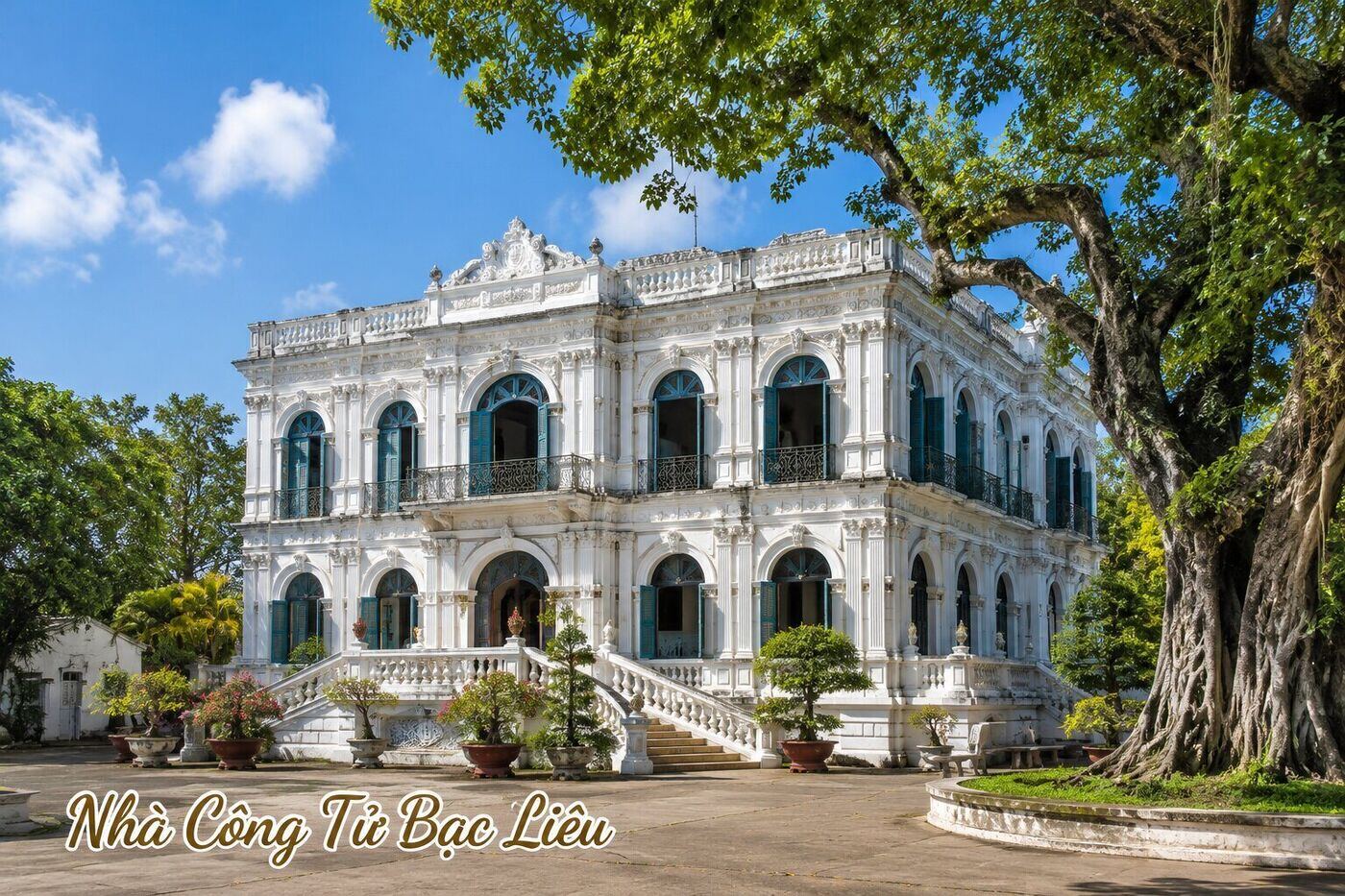
The Prince Bac Lieu House is located in Bac Lieu ward, former Bac Lieu city (now part of Ca Mau province). The villa was built in 1919 in French architectural style, serving as the residence of Mr. Tran Trinh Trach — one of the wealthiest families in the Southern region in the early 20th century. His son, Tran Trinh Huy (Ba Huy), with his extravagant spending tales, became known in folklore as 'Prince Bac Lieu' — the famous prince who burned money to cook green beans, bought an airplane to visit his fields, and lived a luxurious life across Saigon – Bac Lieu. The original villa's building materials and interior were all imported from France: patterned tiles, marble, fireplaces, wine cabinets, etc. Currently, the house has been renovated and opened to tourists, combined with a boutique hotel. This is a symbol of the prosperous era of Bac Lieu, the land of 'golden rice'.
Things to do: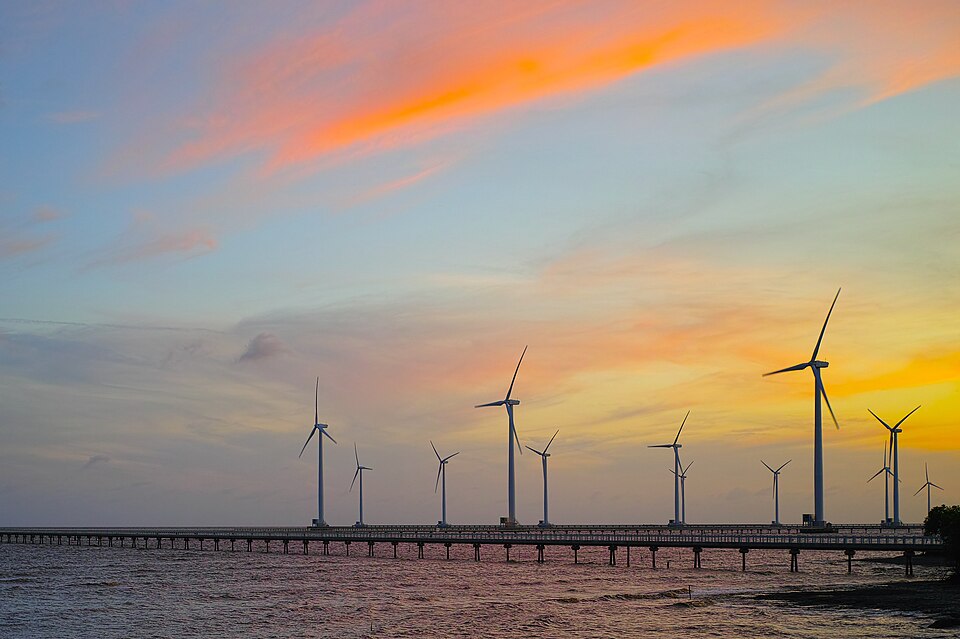
The Bạc Liêu Wind Farm is located in Vĩnh Trạch Đông commune, along the East Sea, about 20 km from the former Bạc Liêu city. As one of Vietnam's first and largest offshore wind power plants, it currently has 62 wind turbines, nearly 100 m tall, with blades 42 m long each. The sight of dozens of white turbines lined up neatly along the coast, spinning steadily in the sun and wind, creates a unique — almost surreal — landscape, unlike anywhere else in the Mekong Delta. Visitors can walk on the wooden bridge leading to the near-shore turbines, take photos, and watch the sunset. During the northeast monsoon season (November to April), the blades spin fastest and strongest. This is one of the most popular check-in spots among young people in the Mekong Delta, especially popular on social media.
Things to do: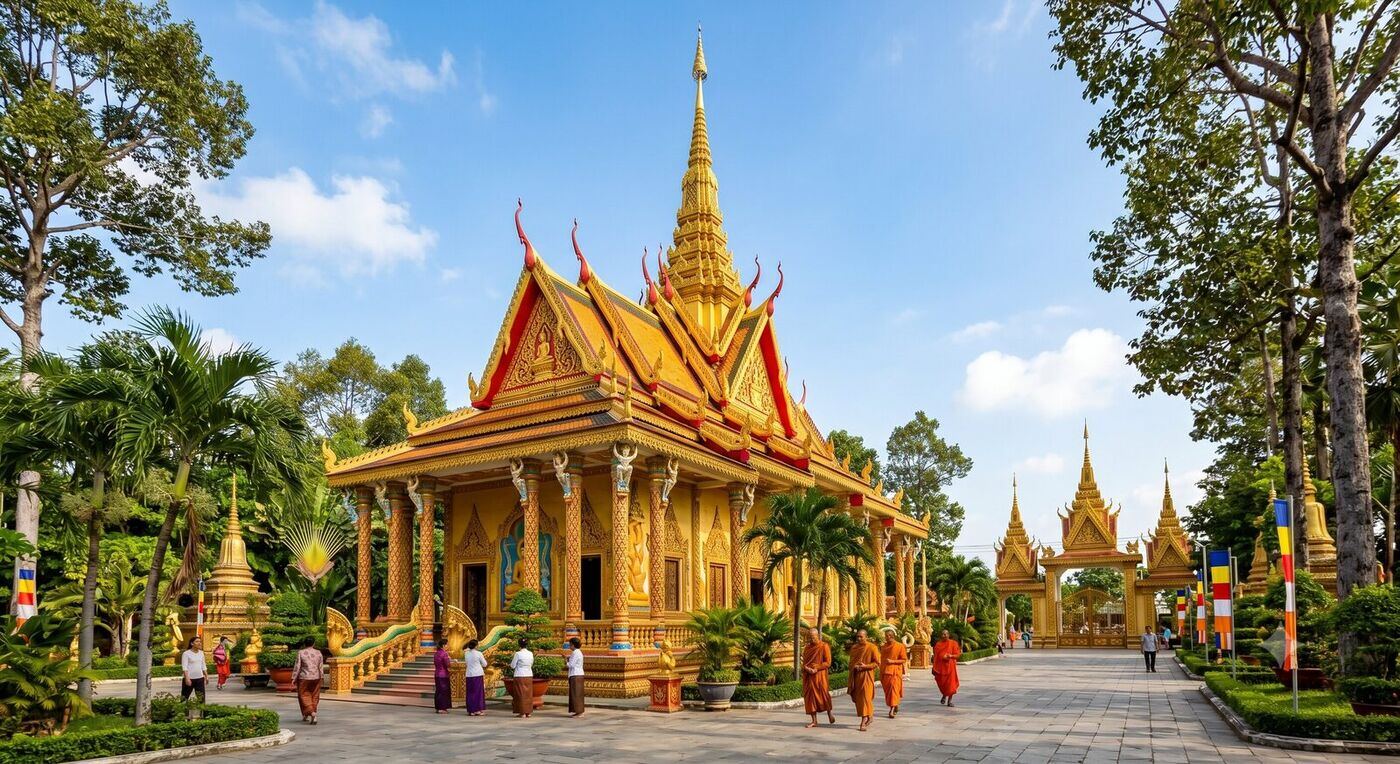
Xiêm Cán Pagoda (Khmer name: Komphir Sakor Prêk Chru) is located in Vĩnh Trạch Đông commune, about 12 km southeast of the former Bạc Liêu city. Built in 1887, the pagoda is one of the oldest and largest Khmer pagodas in the South with a campus of 50,000 m². It features characteristic Khmer Theravada architecture: a soaring main hall with pointed, tower-like roofs, walls painted with vibrant gold-red-blue patterns, colorful statues of Buddha and Apsara dancers, a sala (lecture hall), monks' quarters, and a stupa for relics. Inside the main hall is a large, solemnly enshrined statue of Sakyamuni Buddha, surrounded by murals illustrating stories from the Buddha's life. Today, Xiêm Cán Pagoda remains a center for cultural and religious activities for the Khmer community in the Bạc Liêu region, especially lively during Chol Chnam Thmay (Khmer New Year, in April) and Ok Om Bok (the 10th lunar month).
Things to do:Cà Mau province was newly merged from Cà Mau and Bạc Liêu provinces according to Resolution 202/2025/QH15, effective from July 1, 2025.
In Cà Mau city — the center of the former Cà Mau province. The new province has an area of 7,942.39 km² and a population of 2,606,672 people. The province has 64 cấp xã administrative units, including 55 xã and 9 phường.
The new Cà Mau uses license plate prefixes 69 (former Cà Mau) and 94 (former Bạc Liêu); phone area codes are 0290 and 0291. Documents issued before July 1, 2025, remain valid.
From Cà Mau city, drive 110 km along National Highway 1A and Hồ Chí Minh Road to Đất Mũi commune (about 2.5 hours). Alternatively, take a canoe through rivers and canals for a characteristic Mekong Delta experience.
At the old locations, only the provincial administrative unit has changed: both are still located in Bạc Liêu ward and Vĩnh Trạch Đông commune — now both belonging to the new Cà Mau province.
3-day, 2-night standard tour: Day 1 from Ho Chi Minh City to Bac Lieu (Cong Tu's House, Wind Farm, Xiêm Cán Pagoda); Day 2 back to Can Tho City, visit U Minh Ha; Day 3 go to Dat Mui then return. You can fly directly from Ho Chi Minh City – Can Tho to save time.