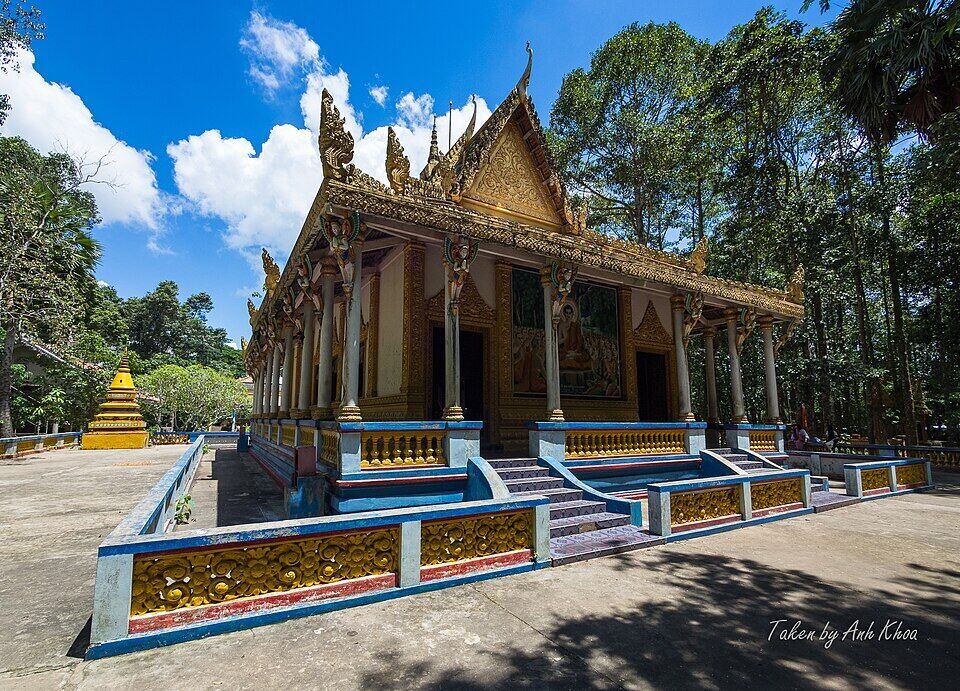
Cần Thơ Province
Western Capital — Cai Rang Floating Market and Ninh Kieu Wharf
Southern Vietnam · Mekong Delta
Western Capital — Cai Rang Floating Market and Ninh Kieu Wharf
Southern Vietnam · Mekong Delta
Can Tho was established by Resolution 202/2025/QH15 through the merger of former Can Tho City and Hau Giang Province. With an area of 6,360.83 km² and a population of nearly 2 million, it is the only centrally-governed city in the Mekong Delta — the economic, educational, and tourist center of the entire region. Former Can Tho was famous for Cai Rang Floating Market — the largest floating market in the Mekong Delta, the poetic Ninh Kieu Wharf on the Hau River, and Tan Loc Islet. Hau Giang contributed Lung Ngoc Hoang Nature Reserve — a characteristic wetland ecosystem, and Nga Bay (Phung Hiep) Floating Market — one of the three largest floating markets in the West (along with Cai Rang and Cai Be). The administrative center is located in Ninh Kieu District, 170 km from Ho Chi Minh City.
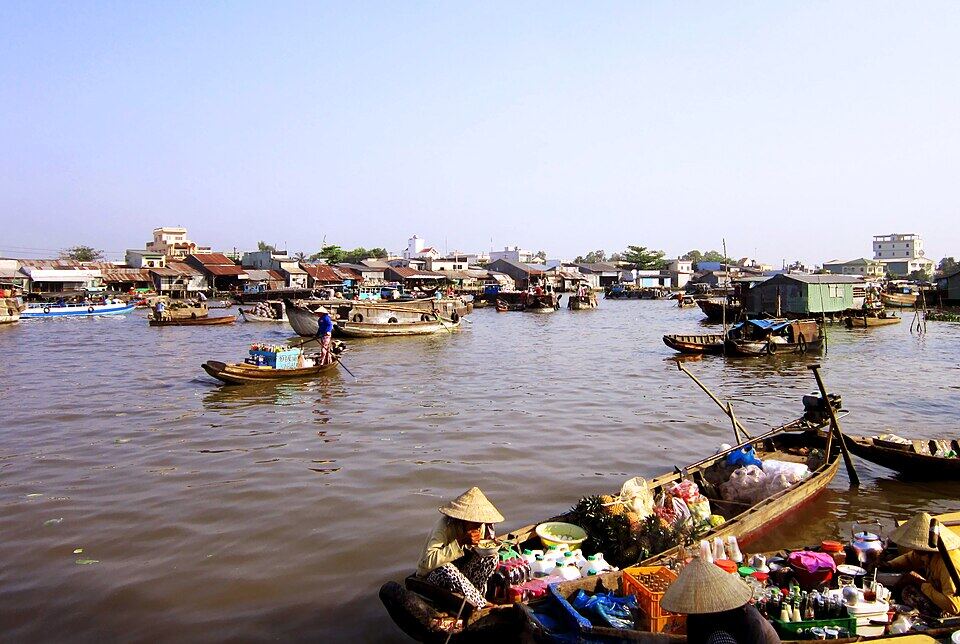
Cái Răng floating market is located on the Cần Thơ River, 6 km from Ninh Kiều Wharf — it is the largest and most famous floating market in the Mekong Delta, recognized as a National Intangible Cultural Heritage in 2016. The market operates from 3 AM to noon, peaking from 5 AM to 7 AM: hundreds of boats carrying fruits and agricultural products anchor, each boat displaying a 'bẹo' (pole with a sample of goods) for buyers to identify. Tourists depart from Ninh Kiều Wharf at 5 AM by motorboat, weaving through the boats to buy fruit to eat on the spot, drink coffee on boats, and have breakfast of hủ tiếu or bún bò on boats. Cái Răng floating market is the most authentic 'breath' of the riverine West — unlike many fading floating markets, Cái Răng remains truly bustling as it is the largest agricultural wholesale market in the region.
Things to do: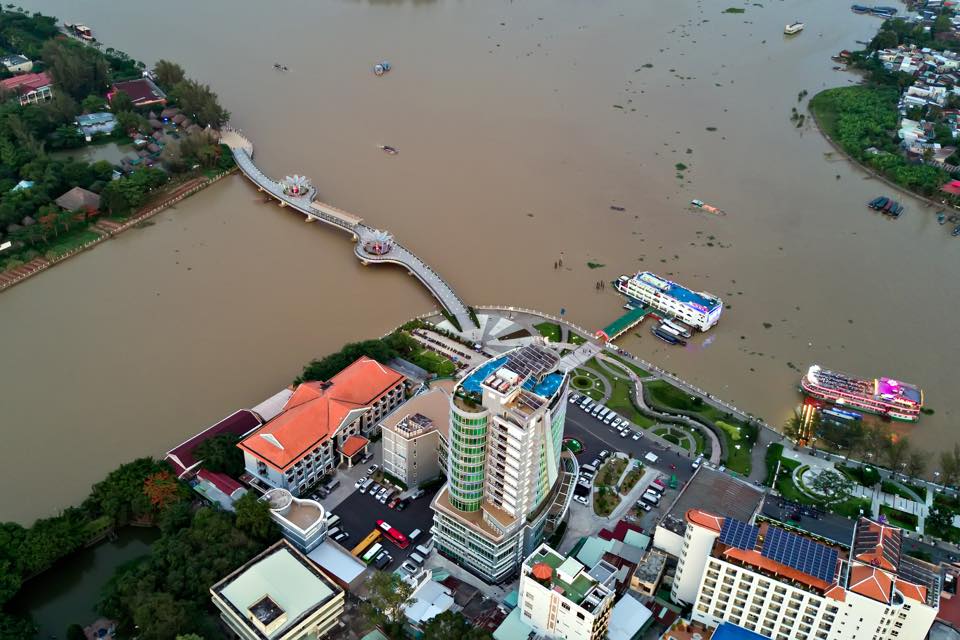
Ninh Kieu Wharf is located on the bank of the Hau River, right in the center of Ninh Kieu District. It is a pier – a riverside park about 1 km long, renovated into a pedestrian street and the busiest cultural space in Can Tho. The name 'Ninh Kieu' is associated with the famous folk song: 'Can Tho white rice, clear water / Whoever comes here, their heart doesn't want to leave'. In the evening, the wharf is sparkling with colorful lights, tourists take boat trips on the Hau River to admire the city, and visit Ninh Kieu night market to buy specialties. From the wharf, boats depart for Cai Rang floating market, Tan Loc islet, and My Khanh. Nearby are the ancient house of Binh Thuy (filming location for 'The Lover' — L'Amant 1992) and Ong Pagoda (Quang Trieu Hoi Quan) worshipping Quan Cong.
Things to do: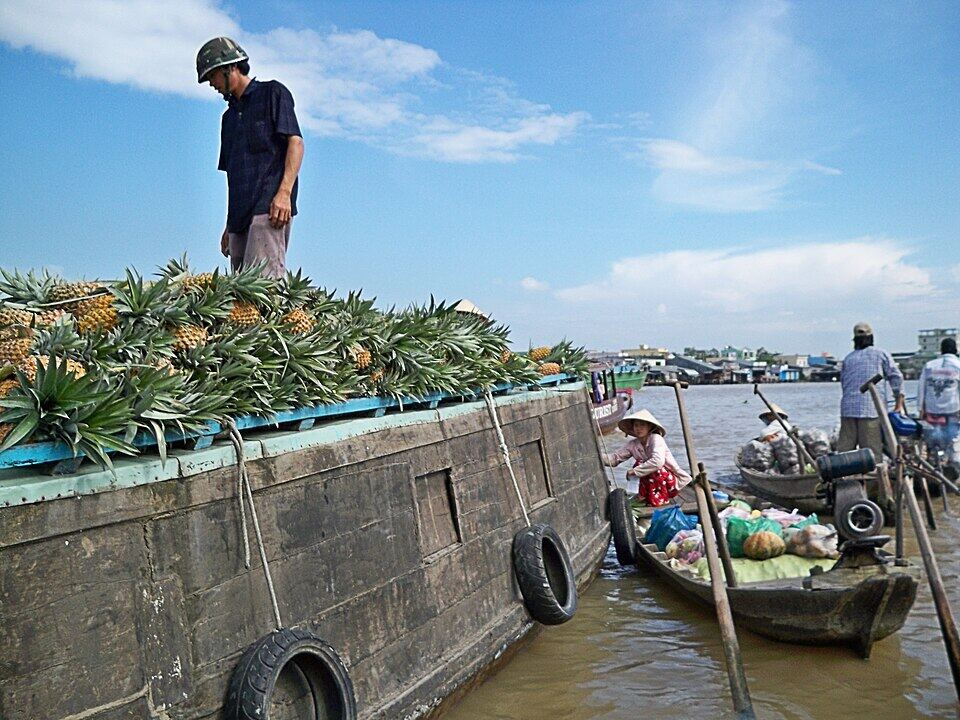
Nga Bay Floating Market (Phung Hiep Floating Market) is located in Nga Bay Town (former Hau Giang province, now part of Can Tho), 35 km south of Can Tho center. The name 'Nga Bay' means 'Seven Junctions' because it's where 7 river branches converge to form a seven-way river junction — creating the busiest floating market in the West since before 1975. Nga Bay Floating Market, along with Cai Rang (Can Tho) and Cai Be (Dong Thap), forms the 'golden triangle' of Mekong Delta floating markets. Unlike Cai Rang (mainly fruits), Nga Bay sells a wider variety: boats of rice, boats of fish sauce, boats of vegetables, boats of live poultry — a colorful picture of the Mekong Delta. Although less bustling than in the 1990s, Nga Bay remains the most 'authentic' floating market — with few tourists, mostly genuine traders.
Things to do: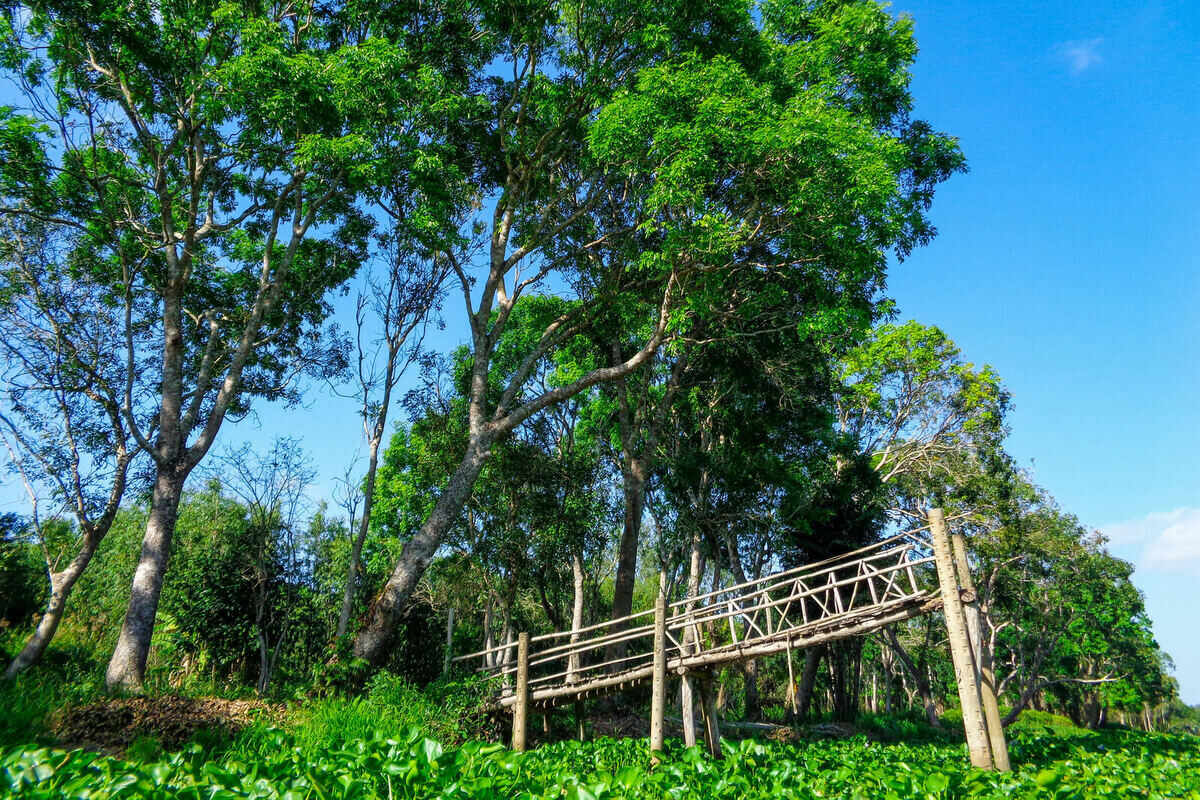
Lung Ngọc Hoàng Nature Reserve is located in Phụng Hiệp district (former Hậu Giang, now part of Cần Thơ), 40 km from Cần Thơ center. With an area of 2,805 ha, it is the most important inland wetland reserve in the Mekong Delta, recording 330 plant species, 206 animal species — including otters, clouded leopards, and king cobras. Lung (lung means waterlogged depression) Ngọc Hoàng was once the wildest area in the West — now it still retains its original ecosystem of cajeput forests, flooded grasslands, and canals. Tourists take boats weaving through the flooded cajeput forests, watching egrets in flocks, and fishing — experiencing the 'pristine West' found nowhere else. Nearby is the Dien Bien Phu Air Battle monument (?)
Things to do: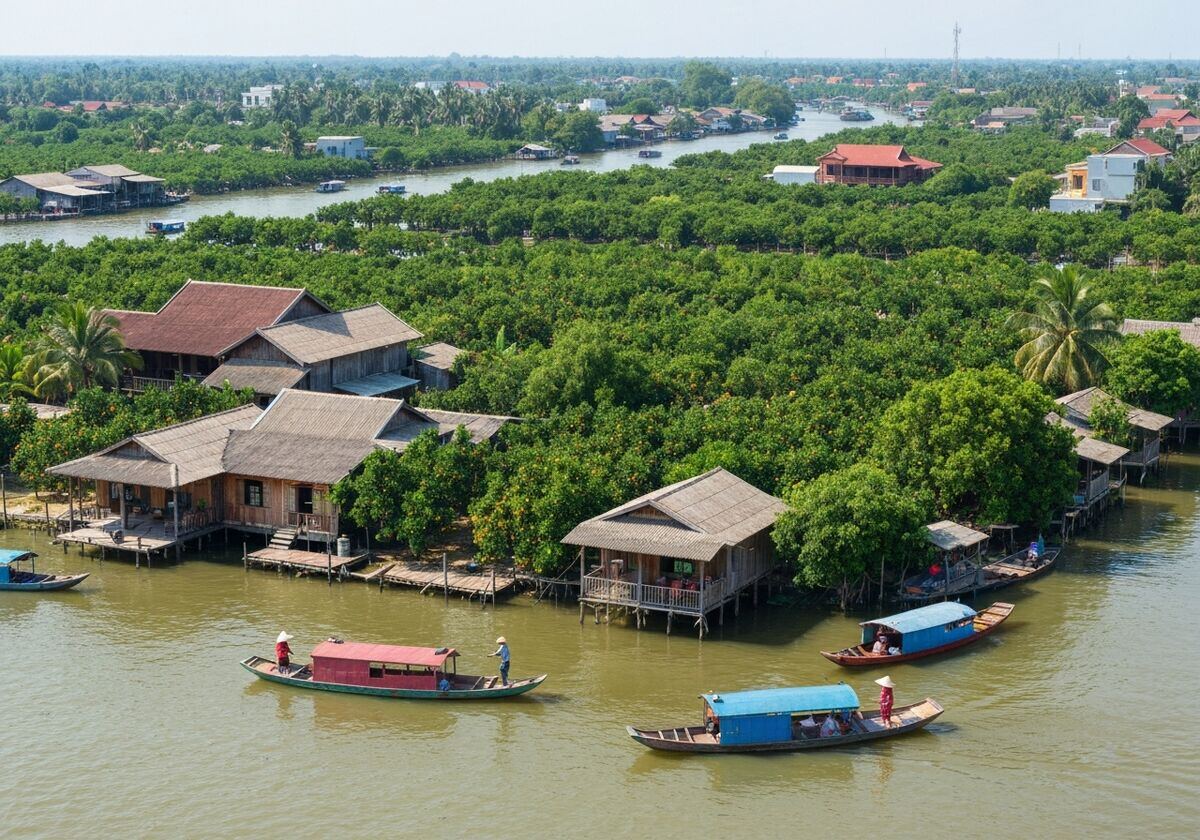
Tan Loc islet lies in the Hau River, in Thot Not District, 30 km from Can Tho city center. Spanning 32 km² with about 20,000 inhabitants — this is the largest islet in the Hau River. Unlike Thoi Son islet (Tien Giang) which is crowded with tourists, Tan Loc remains very peaceful and authentic. On the islet, there are abundant longan, rambutan, and durian orchards; notably, there is a cluster of over 100-year-old Southern ancient houses — featuring precious wooden architecture, yin-yang tiled roofs, with original altars, cabinets, and rosewood benches. Tourists cycle along the green village roads, visit fruit orchards for on-site tasting, stay in garden homestays, and enjoy clay pot braised fish with local vegetables — the most authentic Mekong Delta experience.
Things to do: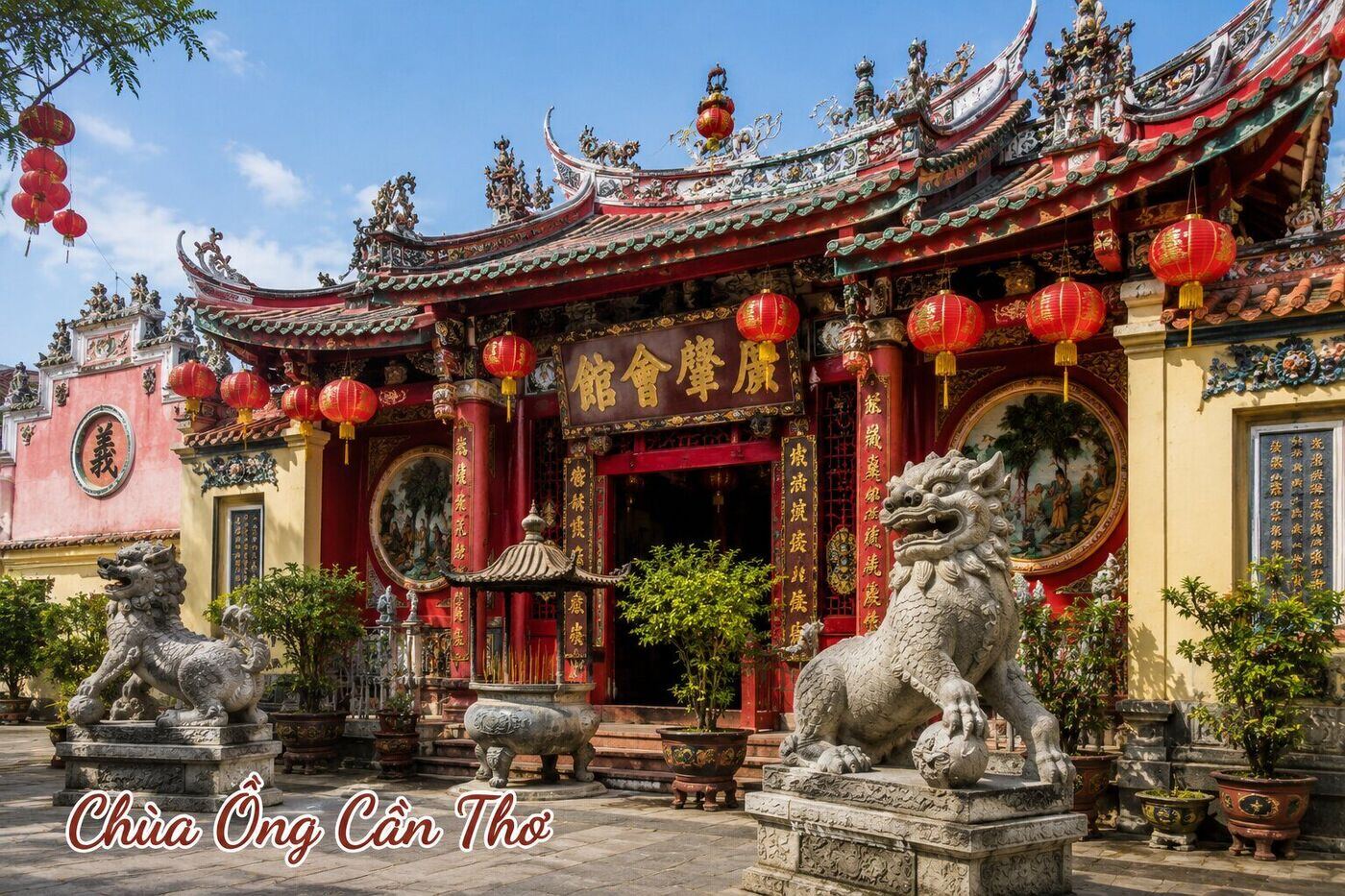
Ong Pagoda (Quang Trieu Hoi Quan) is located at Hai Ba Trung Street, Ninh Kieu District, 300m from Ninh Kieu Wharf. Built in 1894 by the Guangdong Chinese community — a National Architectural and Artistic Relic. The assembly hall worships Quan Thanh De Quan (Quan Cong) — symbolizing loyalty and righteousness, and Thien Hau Thanh Mau — the sea goddess. The entire architecture is made of materials imported from Guangdong: stone columns, glazed tiles, Thach Loan ceramic reliefs on the roof depicting stories from the Three Kingdoms and Investiture of the Gods, and gilded wooden panels. Inside, there is an ancient bronze incense burner set, Chinese tablets, and 4 carved wooden couplets — an overall masterpiece of Cantonese art in the heart of the Mekong Delta.
Things to do: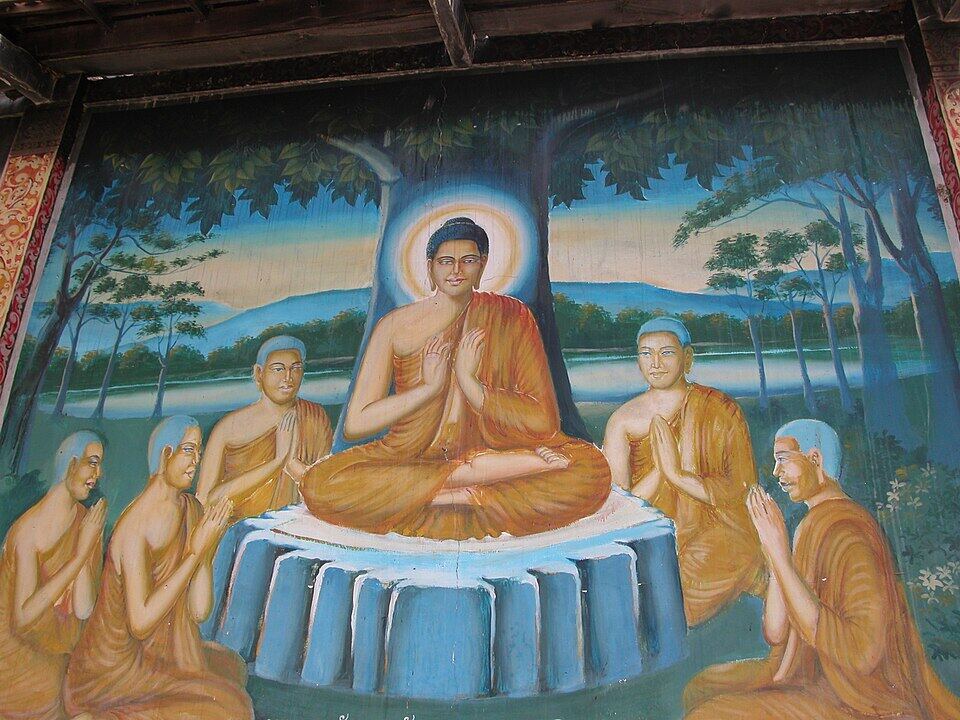
Doi Pagoda (Khmer name: Serây Têchô Mahatup) is located 2 km from the center of Soc Trang City. Built in the 16th century (around 1569) — it is the oldest Khmer pagoda in Soc Trang. Its most unique feature: thousands of fruit bats (Pteropus lylei) with a wingspan of 1.2 – 1.5 m hang upside down on sao and dau trees within the pagoda grounds all day, flying out to forage in the evening — creating a fascinating spectacle. The pagoda's architecture is in the Angkor style: multi-tiered pointed roofs, Apsara and Naga (divine serpent) bas-reliefs, vibrant gold paint, and a large main hall worshipping Buddha Thich Ca. Within the grounds, there is a small museum displaying Khmer cultural artifacts and a 5 m long whale skeleton. Doi Pagoda is a National Architectural Art Relic — Soc Trang's most famous tourist attraction.
Things to do: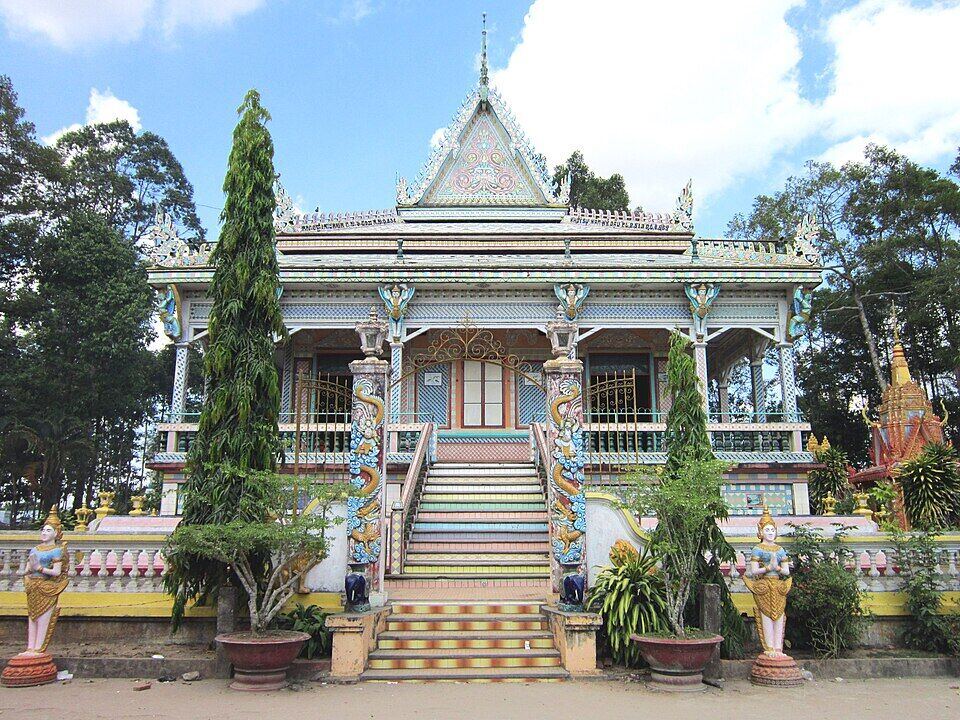
Chen Kieu Pagoda (Khmer name: Sro Lôn, meaning 'Royal Crown') is located in Dai Tam commune, My Xuyen district, 12 km from Soc Trang City. It is famous because the entire exterior of the main hall is inlaid with millions of broken pieces of bowls, plates, pottery, and porcelain — creating a multi-colored sparkling surface under the sun. This is why it is called 'Chen Kieu' (Bowl Pagoda). The pagoda was built in 1815 and has undergone many renovations. Its architecture combines classical Khmer (multi-tiered pointed roofs, Garuda and Naga statues) with folk pottery and porcelain inlay art. Inside the main hall, there is a large statue of Buddha Thich Ca and murals depicting the Buddha's past lives. The spacious grounds include a sala (Pali scripture study hall), stupas, and lush gardens — making it quieter than Doi Pagoda.
Things to do: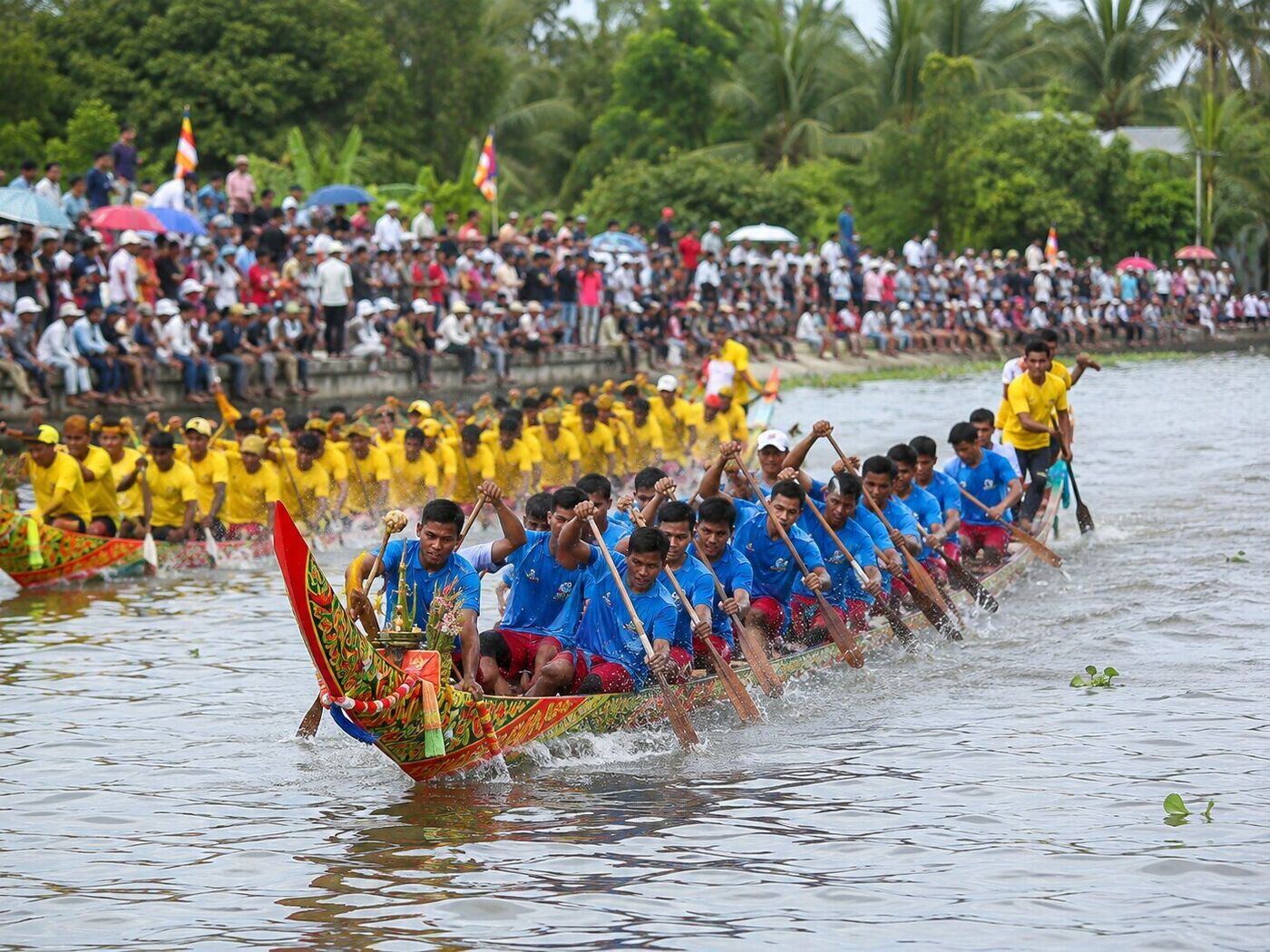
Ooc Om Boc (Moon Worshiping) is the most important traditional festival of the Southern Khmer people, held annually on the full moon of the 10th lunar month (usually November in the solar calendar). In Soc Trang, the festival is organized on the largest scale nationwide: on the full moon night, the Moon is worshiped with flattened rice (ambok) — a ceremony to thank the Moon for illuminating the crops; the next day is the Ngo boat race on the Maspero River — a race of 30 m long boats, with 50 – 60 rowers per boat, between Khmer pagodas throughout the province. Hundreds of thousands of people stand on both banks of the river to cheer — the most vibrant atmosphere in the Mekong Delta. The festival has been recognized as a National Intangible Cultural Heritage by the Ministry of Culture, Sports and Tourism. Simultaneously, there is a Khmer culinary fair, performances of Ngũ Âm music, Ro Bam dance, and floating water lanterns.
Things to do: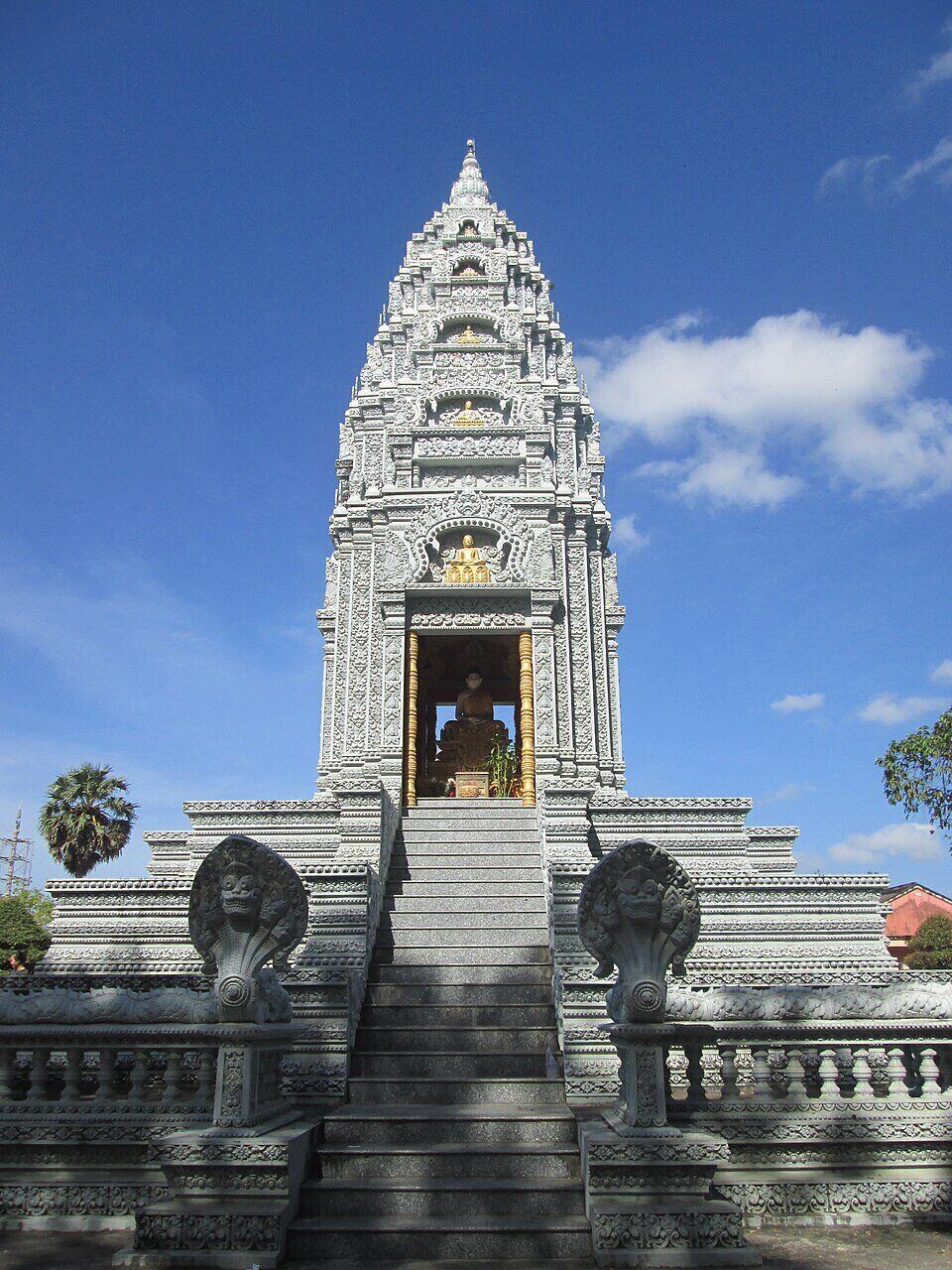
Sóc Trăng has 92 Khmer pagodas (wat) — the most in the country — spread across its districts, with every phum sóc (Khmer hamlet) having at least one pagoda. Besides the famous chùa Dơi and chùa Chén Kiểu, many other pagodas are worth visiting: chùa Kh'leang (1533, the oldest in Sóc Trăng, pure Khmer architecture); chùa Đất Sét (Bửu Sơn Tự, not a Khmer pagoda but unique with thousands of clay statues created by one person over 42 years); chùa Chăm Pa (Champa and Khmer mixed architecture). Khmer pagodas are the cultural, educational, and religious centers of the community: Khmer children go to the pagoda for 1-3 years (mandatory) to learn Khmer script, Buddhist scriptures, and etiquette. Khmer pagoda architecture is distinctive: multi-tiered pointed roofs painted bright yellow, Naga serpents on the stairs, statues of Garuda, Apsara, and Kinnari surrounding them.
Things to do: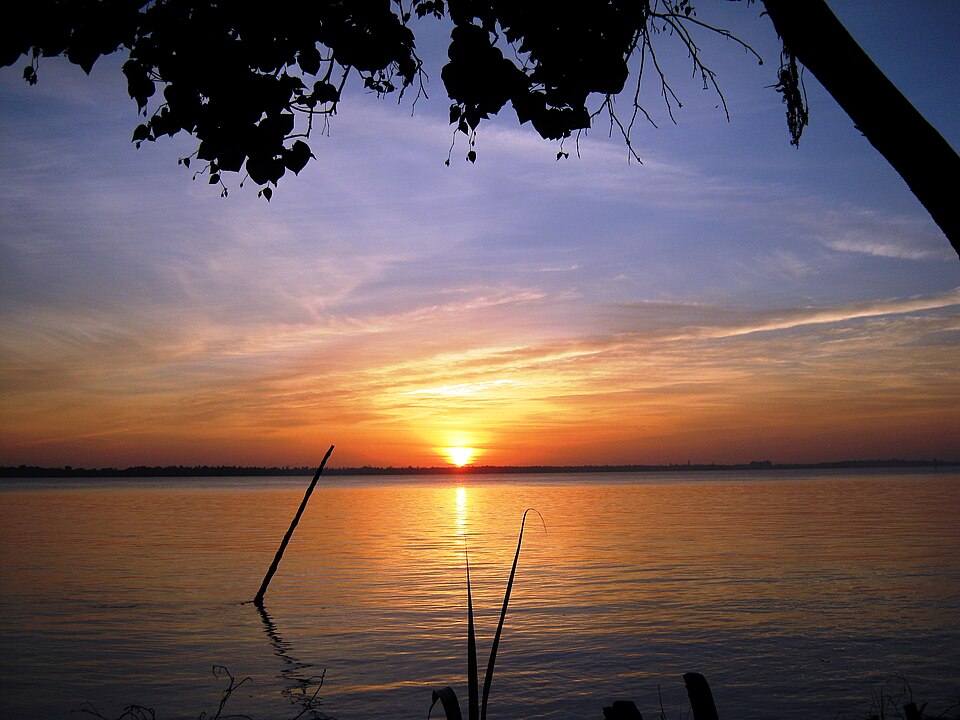
Cù lao Dung is an island district located at the mouth of the Hậu River flowing into the East Sea, 30 km from TP Sóc Trăng. With an area of 262 km² and a population of about 65,000 — it is the largest islet at the mouth of the Cửu Long River. The islet is famous for its vast sugarcane fields — Sóc Trăng was once the sugarcane capital of the Mekong Delta. The seaward tip of the islet has a pristine bần forest (mangrove forest) — a transitional river-sea ecosystem with diverse birds, fish, and shrimp. Visitors take a ferry to the islet, cycle along the sugarcane dike, admire the vast Hậu River, and stop at local homes to eat grilled snakehead fish and drink coconut water. Cù lao Dung is pristine — not yet heavily developed for tourism, suitable for those who want to experience the most authentic Mekong Delta.
Things to do: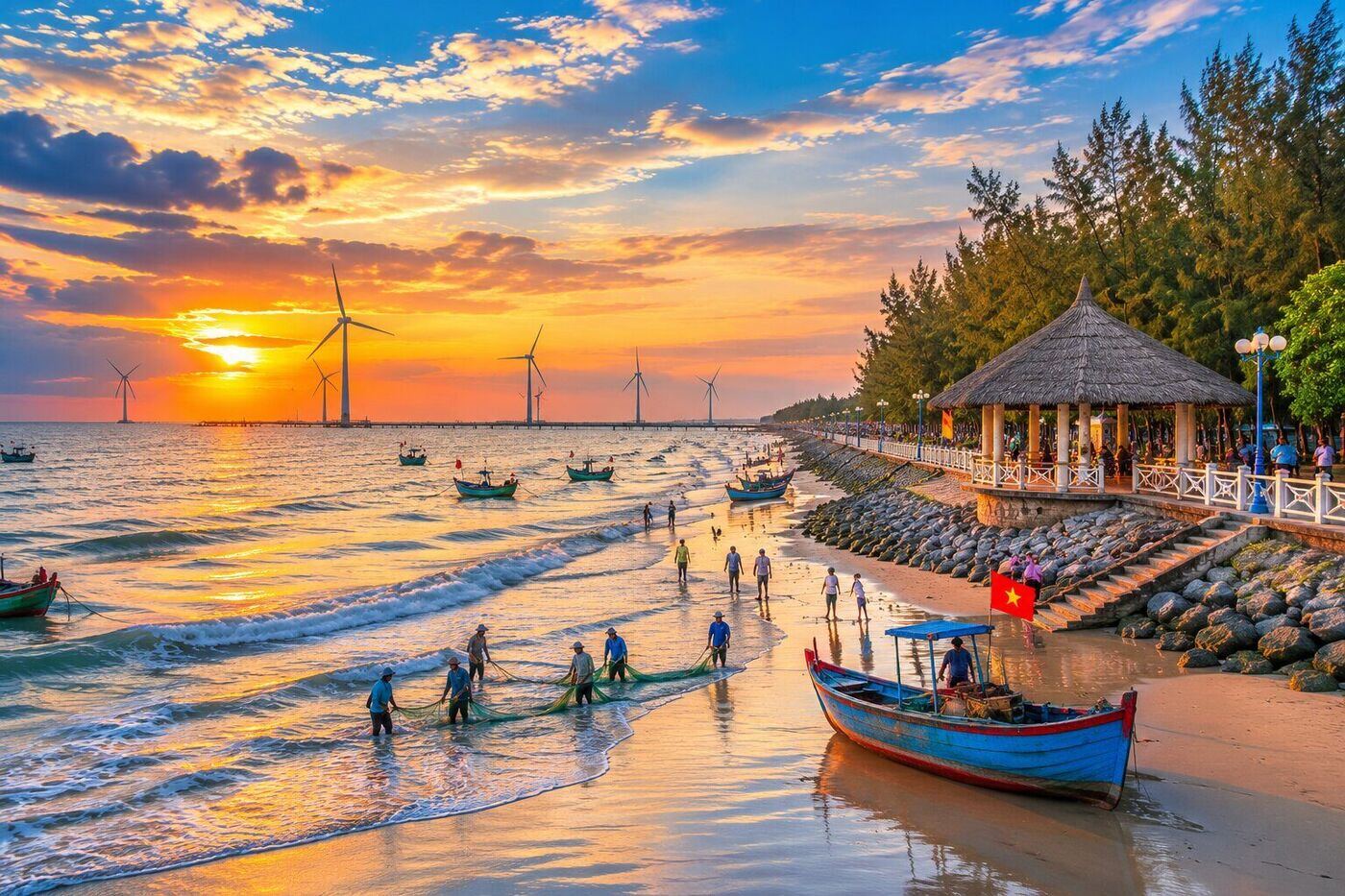
Vinh Chau beach is located in Vinh Chau town, 40 km east of Soc Trang city. Not a white sand beach — this is a Mekong River alluvial beach: a wide muddy shore, murky water but rich in shrimp and fish, especially the natural clam beds (ngao) spanning thousands of hectares — a major source of export clams. Visitors can experience riding an ox cart to the clam beds at low tide, catching clams by hand, and grilling them right on the beach. Vinh Chau is more famous for its shallots — an endemic purple shallot variety, spicier and more fragrant than common onions, grown on sandy-gravelly soil, with a geographical indication. The shallot fields are lush green and beautiful from February to April. The area also has a Teochew Chinese community and ancient Khmer pagodas.
Things to do:According to Resolution 202/2025/QH15, the new Can Tho was merged from the former Can Tho city and Hau Giang province. Effective from July 1, 2025.
The market opens at 3 AM, with the busiest hours from 5 AM to 7 AM. Tours depart from Ninh Kiều pier around 4:30 AM – 5 AM, taking a 30-minute motorboat ride to the market. Group tours cost approximately 100,000 – 200,000 VNĐ/person.
Approximately 170 km – by car on the Trung Lương – Mỹ Thuận – Cần Thơ expressway, it takes about 2h30. You can also fly for 50 minutes (Vietnam Airlines, VietJet). There is no train service.
Cái Răng is larger, more popular with tourists, and mainly sells fruit. Ngã Bảy is smaller, has fewer tourists, and sells a wider variety of goods (rice, fish sauce, vegetables, poultry) – it's a more 'authentic' and original market. They are 35 km apart.
Yes. Cần Thơ International Airport is 10 km from the city center – with direct flights to Ho Chi Minh City, Hà Nội, Đà Nẵng, Phú Quốc, and some seasonal international routes (Bangkok, Taipei).
At least 2 days: morning at Cái Răng floating market + Ninh Kiều pier, afternoon at cù lao Tân Lộc. Day 2: Ngã Bảy floating market + Lung Ngọc Hoàng. You can also combine a 1-day trip to Đồng Tháp (Tràm Chim) or Vĩnh Long (cù lao An Bình).