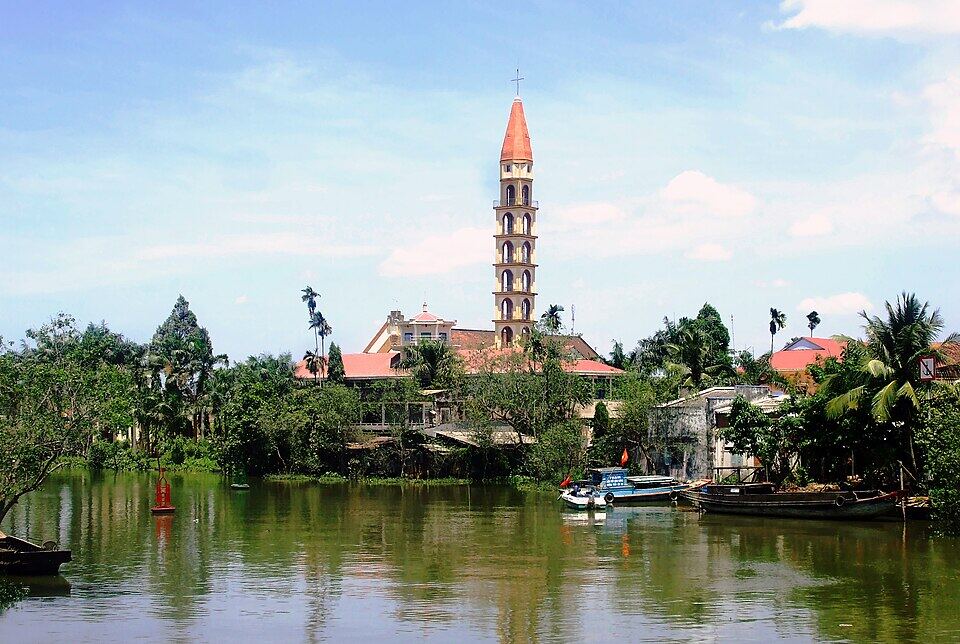
Vĩnh Long Province
The green islets of the Mekong Delta – the coconut land of Bến Tre and Khmer pagodas of Trà Vinh
Southern Vietnam · Mekong Delta
The green islets of the Mekong Delta – the coconut land of Bến Tre and Khmer pagodas of Trà Vinh
Southern Vietnam · Mekong Delta
The new Vĩnh Long was established according to Resolution 202/2025/QH15 on the basis of merging the three former provinces of Vĩnh Long, Bến Tre, and Trà Vinh. With an area of 6,296.20 km² and a population of over 3.32 million people, the province is located between the two branches of the Tiền River and Hậu River – the center of the Mekong Delta. The former Vĩnh Long had cù lao An Bình – the most famous garden homestay model in the Mekong Delta. Bến Tre – 'coconut land' with 72,000 ha of coconuts (the largest in Vietnam), where the Đồng Khởi movement of 1960 took place, and specialties like coconut candy, coconut water, and coconut oil. Trà Vinh bears the most distinct Khmer cultural identity in the Southern region with 141 Khmer pagodas – the most nationwide, especially chùa Âng and chùa Hang (Kompong Chrây). The administrative center is located in Vĩnh Long city, 135 km from Ho Chi Minh City.
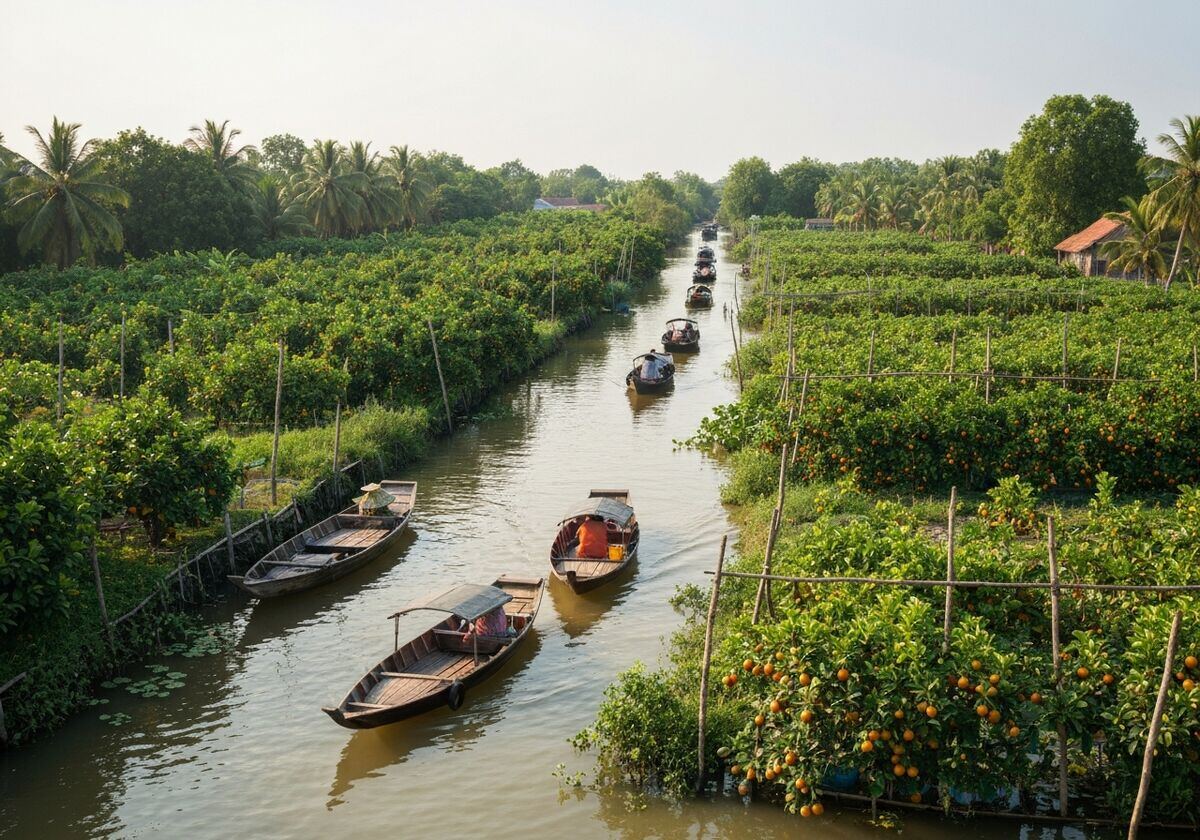
Cù lao An Bình is in Long Hồ district, 5 km from Vĩnh Long city via ferry. This is a cluster of islets including An Bình and Bình Hoà Phước, spread across the Tiền River, with a total area of about 60 km². It is famous for its highly-rated garden homestay system in the Mekong Delta — visitors sleep in local homes amidst longan, rambutan, and durian orchards; wake up to birds singing, have bánh xèo miền Tây for breakfast, and travel by sampan through the canals. Famous homestays: Út Trinh, Ba Linh, Nguyên Thanh — serving both Western and domestic guests. The islet also features the Cai Cường ancient house (19th century) with characteristic Southern wooden architecture, a cacao garden, and a heavily laden sapodilla garden.
Things to do: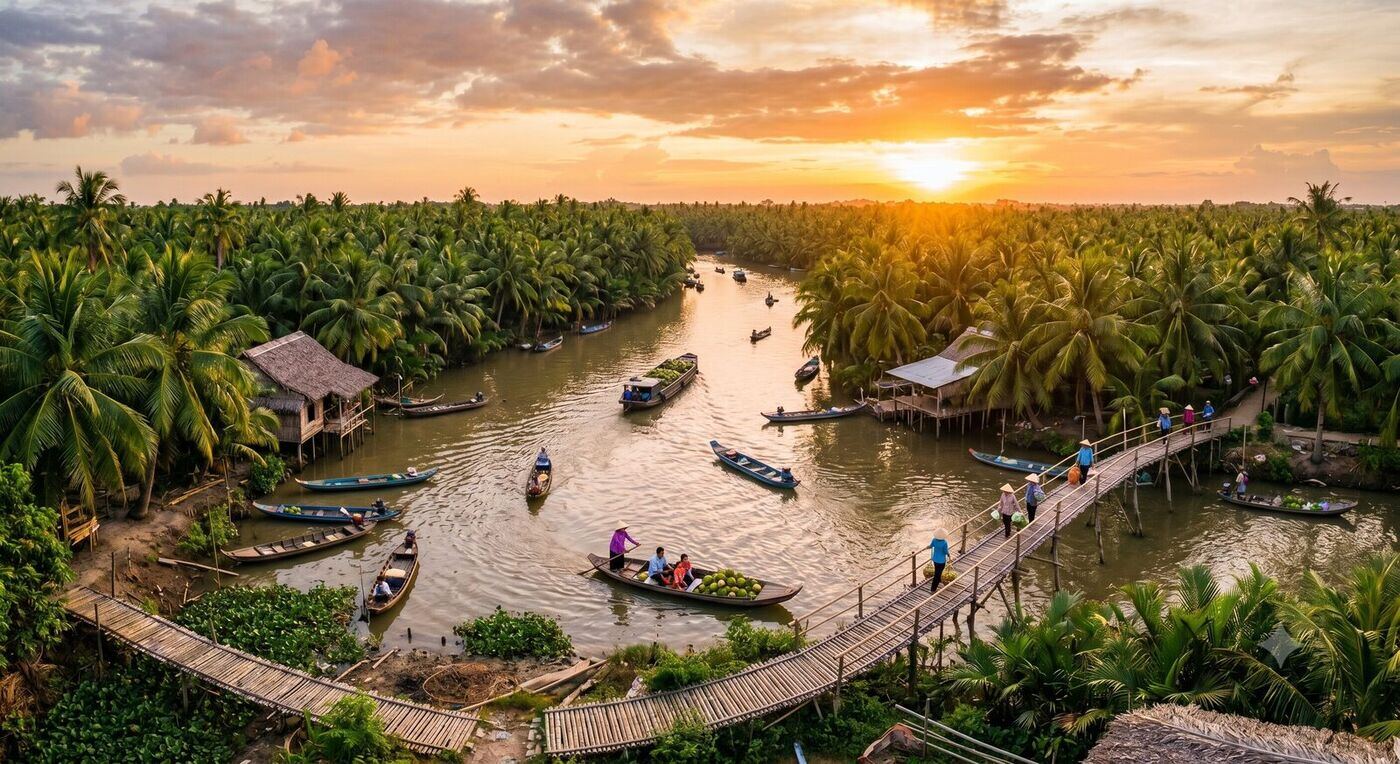
Bến Tre is known as the 'land of coconut' with a coconut cultivation area of about 72,000 ha — the largest in Vietnam, accounting for nearly 40% of the country's total coconut output. After the merger, the entire Bến Tre coconut region belongs to the new Vĩnh Long province. Visitors can experience the full coconut value chain: visit century-old coconut gardens, watch traditional coconut candy processing at Phú An, Thanh Long candy factories, drink fresh coconut water, eat gỏi cuốn wrapped in coconut leaves, and wash their hair with handmade coconut oil. Besides coconuts, Bến Tre features characteristic riverine islets: cù lao Phụng (Cồn Phụng) with the unique Đạo Dừa relic, cù lao Ốc, and cù lao Thới. Bến Tre is also where the Đồng Khởi movement was launched on January 17, 1960 — an important historical event in the resistance against America.
Things to do: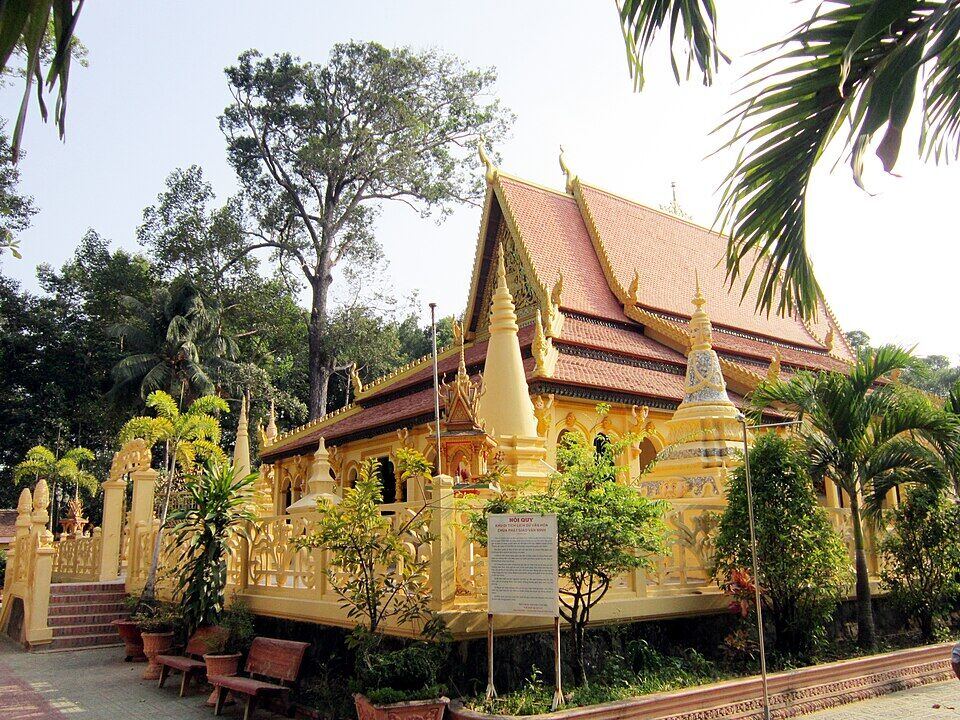
Chùa Âng (Angkorajaborey, also known as Chùa Ông Mẹt) is located right in the center of Trà Vinh City (former Trà Vinh, now part of Vĩnh Long). Built in the 10th – 11th centuries, this is the oldest Khmer pagoda in the Mekong Delta. The pagoda is situated amidst hundreds of years old sao trees, with a main hall roofed with blue and yellow glazed tiles in traditional Khmer architecture with multi-tiered curved roofs, decorated with naga (mythical serpents) and kinnari (mythical birds). The interior features a gilded statue of Shakyamuni Buddha and murals depicting the life of Buddha. Trà Vinh has 141 Khmer pagodas — the most in the country — reflecting the Khmer community which accounts for 31% of the population. The Ok Om Bok festival (moon worship) in the 10th lunar month and Chol Chnam Thmay (Khmer New Year) in April are the two largest Khmer festivals here.
Things to do: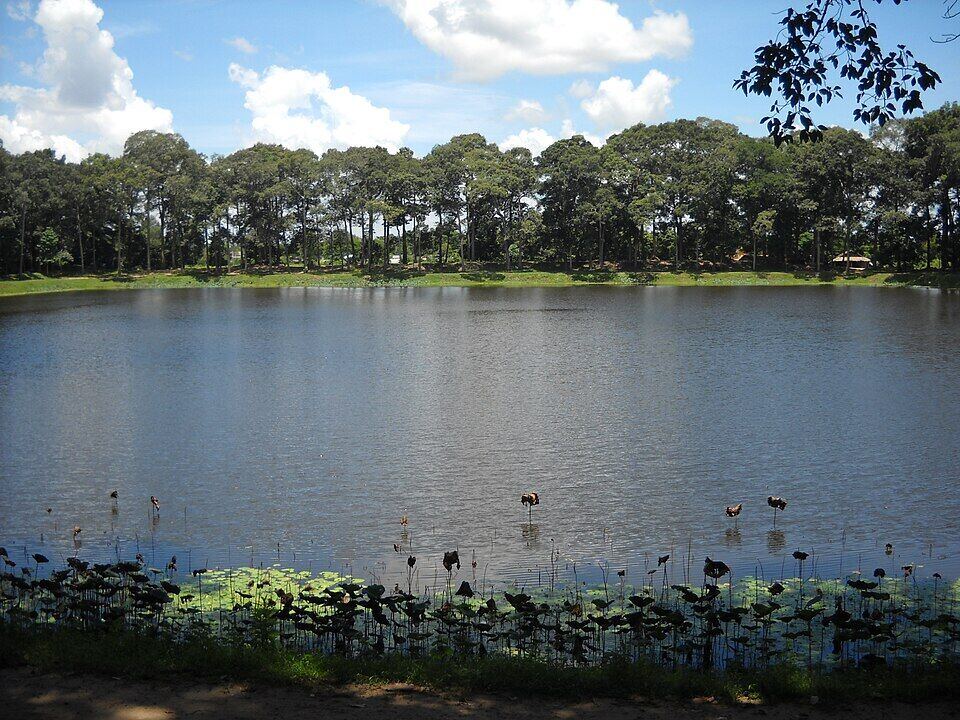
Ao Bà Om is located 5 km from the center of Trà Vinh city. It is a rectangular freshwater pond, approximately 4 ha wide, and has been classified as a National Historical-Cultural Relic. According to Khmer legend, the pond was dug during a competition between men and women—whoever finished digging the pond first would win; the women's team (led by Bà Om) finished first, so the pond bears her name. Surrounding the pond is a forest of centuries-old sao trees, with roots exposed above ground creating a mystical landscape—which impressed National Geographic magazine when it featured the Mekong Delta region of Vietnam. Ao Bà Om is the main venue for the annual Ok Om Bok Festival (moon worship, ngo boat race) and a popular weekend picnic spot for people in Trà Vinh.
Things to do: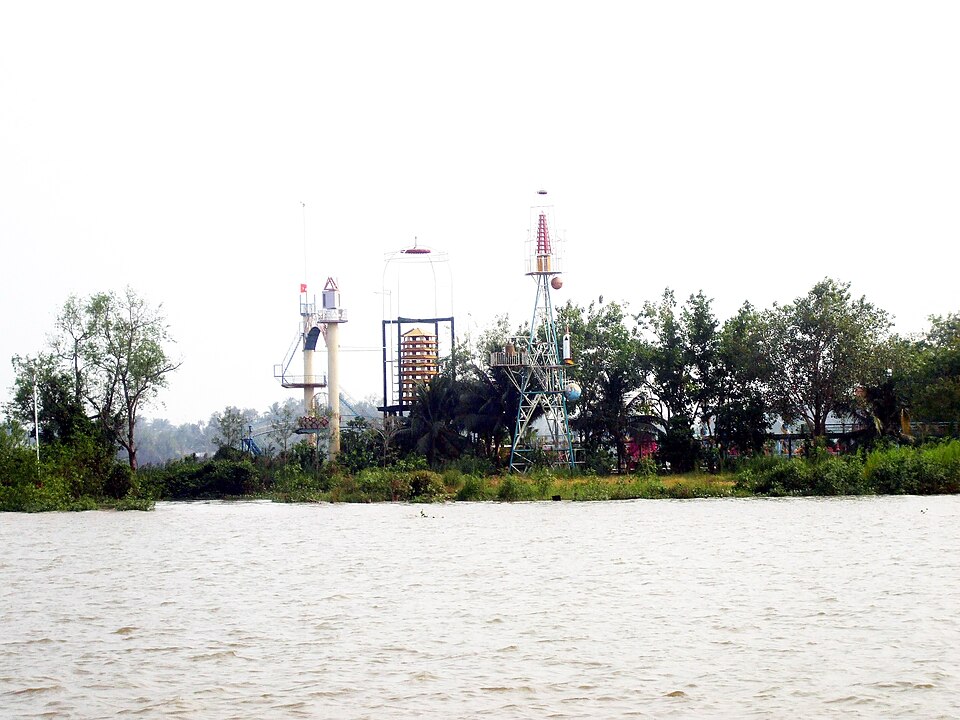
Cồn Phụng (Phụng islet) is located in the middle of the Tiền River, belonging to Tân Thạch commune, Châu Thành district (former Bến Tre, now part of Vĩnh Long). The islet is famous for the Đạo Dừa relic—a religion founded by Nguyễn Thành Nam (1909 – 1990, graduated with a chemical engineering degree in France) around 1945, combining Buddhism and Catholicism. He lived on the islet, ate only coconuts, shaved his head, meditated on a 3 m high pole, and called for peace during the war—he was popularly known as 'Ông Đạo Dừa'. The relic includes a dragon courtyard (meditation area), a 9-story tower with the words 'Hoà Bình' (Peace), and a 15 m long peace conference table—all made of concrete decorated with unusual ceramic shards. Visitors often combine a visit to Cồn Phụng with nearby islets Quy, Long, and Thới Sơn.
Things to do: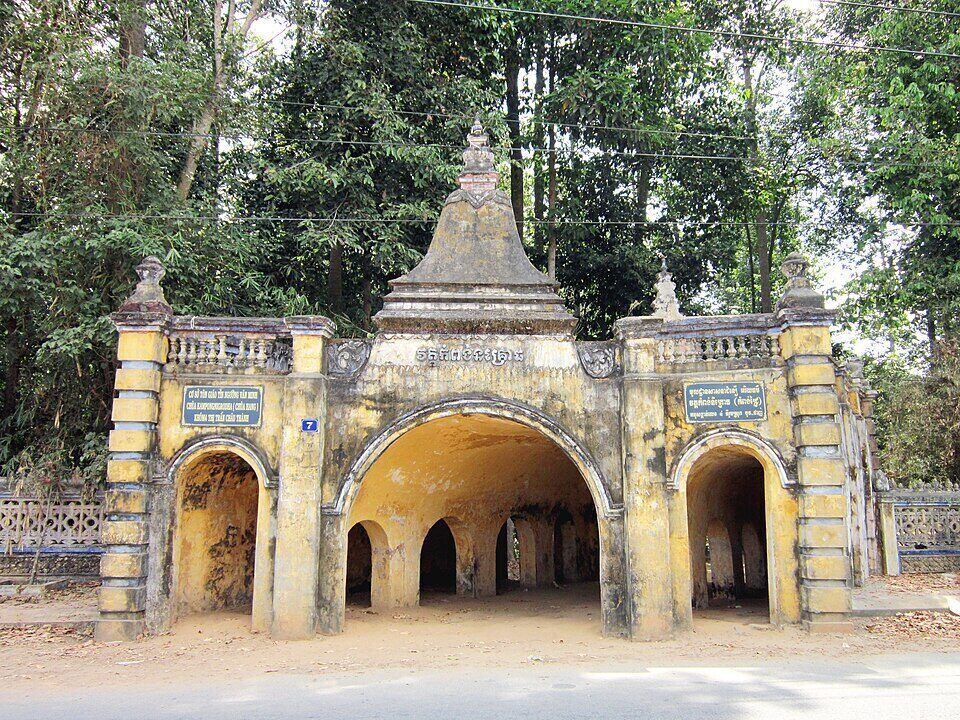
Chùa Hang (Kompong Chrây) is located in Hàm Giang commune, Trà Cú district (former Trà Vinh, now part of Vĩnh Long), 35 km from Trà Vinh city. It is named 'chùa Hang' (Cave Pagoda) because the surrounding forest of ancient sao and dầu trees forms a 'tree cave' — the canopy blocks out light, and roots hang down like curtains. Within the pagoda grounds, a giant gừa tree completely envelops a small shrine — its trunk tightly embraces the walls and roof, and aerial roots cover it, creating a magical landscape reminiscent of Ta Prohm (Angkor, Cambodia) Vietnamese version. The main pagoda features traditional Khmer architecture with multi-layered curved roofs and Jataka mural paintings (stories of the Buddha's previous lives) inside. Surrounding it is a spacious 5 ha compound with fruit orchards, a lotus pond, and a sala (Khmer guest house).
Things to do:According to Resolution 202/2025/QH15, the new Vĩnh Long was merged from three provinces: former Vĩnh Long, Bến Tre, and Trà Vinh. Effective from July 1, 2025.
In Vĩnh Long city — the former provincial capital of Vĩnh Long, 135 km from Ho Chi Minh City. Bến Tre city (65 km) and Trà Vinh city (65 km) are regional centers.
Coconuts — with 72,000 ha, the largest coconut area in Vietnam. Specialties include coconut candy, Mỹ Lồng rice paper, Sơn Đốc puffed rice cakes. History of the Đồng Khởi movement on January 17, 1960.
141 Khmer pagodas — the most in the country. The Khmer community accounts for 31% of the population of former Trà Vinh. Chùa Âng (10th – 11th century) is the oldest, and Chùa Hang (Kompong Chrây) is the most impressive.
Approximately 135 km — Trung Lương – Mỹ Thuận expressway, about 2 hours by car. To Bến Tre 85 km (1h30). To Trà Vinh 130 km (2h30). There is no airport, go by car or coach.
Dừa sáp is a special coconut variety found only in Cầu Kè (Trà Vinh former) — the coconut flesh is thick and creamy like ice cream, instead of water inside. Prices range from 100,000 – 200,000 VNĐ/fruit. Buy at Cầu Kè market or order from local gardens.