Đà Nẵng Province
Liveable city — mystical Bà Nà and Hội An ancient town
Central Vietnam · South Central Coast
Liveable city — mystical Bà Nà and Hội An ancient town
Central Vietnam · South Central Coast
The new Đà Nẵng was established according to Resolution 202/2025/QH15 based on the merger of the former Đà Nẵng city and Quảng Nam province. With an area of 11,859.59 km² and a population of 3,065,628 people, it is the second largest centrally-governed city in the country after TP.HCM. The new Đà Nẵng possesses one of the densest clusters of UNESCO heritage sites in Southeast Asia: Hội An Ancient Town (World Cultural Heritage 1999), Mỹ Sơn Sanctuary (World Cultural Heritage 1999), and Chàm Islands – Hội An Biosphere Reserve. It has a 124 km long coastline with some of the most beautiful beaches in the world such as Mỹ Khê, Non Nước, An Bàng, Cửa Đại. The administrative center is located in Hải Châu district (Đà Nẵng former) — the 'most liveable city in Vietnam' according to many rankings. After the merger, Hoàng Sa special administrative zone is directly under the city.
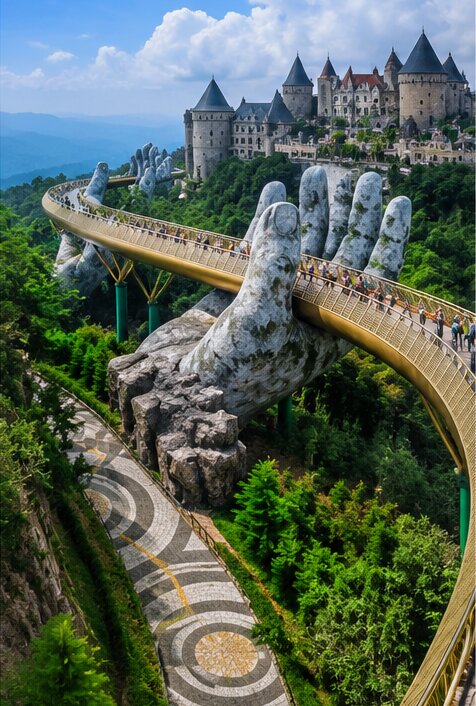
Ba Na Hills is located on Chua Mountain at an altitude of 1,487 m in Hoa Vang district, 35 km southwest of Da Nang city center. Developed by the French as a resort in 1919, it is now a tourist complex of Sun Group with a cool climate year-round of 17 – 20°C. The main attraction is the 150 m long Golden Bridge, inaugurated in 2018 — the bridge is supported by two giant moss-covered stone hands, named by Time magazine as one of the 100 greatest destinations in the world and putting Vietnam on the global tourism map. The Ba Na cable car system has 6 routes that have held 4 Guinness World Records — including the Hoi An – Marseille route, which is 5,801 m long with an altitude difference of 1,368 m. At the summit, there is a French Village recreating the ancient architecture of Provence, the Fantasy Park indoor amusement area, the 100-year-old Debay Wine Cellar, Linh Ung Pagoda, and a 27 m Buddha statue.
Things to do: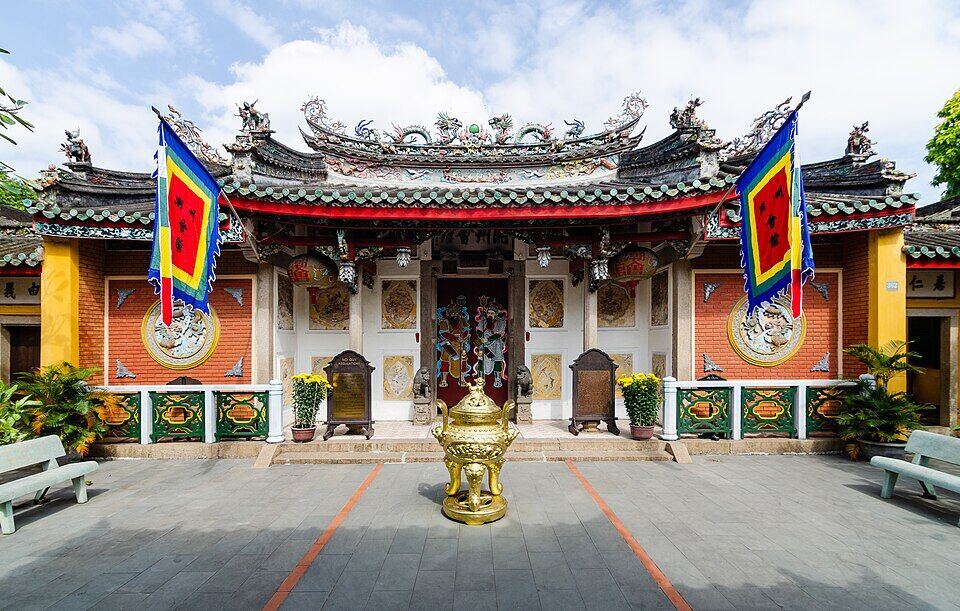
Hội An Ancient Town is located on the right bank of the Thu Bồn River, 30 km southeast of Da Nang — now part of the new Da Nang city. Recognized by UNESCO as a World Cultural Heritage site in 1999, it is one of the few ancient trading ports in Southeast Asia that has been preserved intact — with architecture remaining from the time Japanese, Chinese, and European merchants came to trade in the 16th – 19th centuries. The ancient town covers 30 ha with over 1,000 relics including the Japanese Covered Bridge (built 1593, a symbol of Hội An), Tấn Ký Old House, Phùng Hưng Old House, and the Fujian, Guangdong, and Triều Châu Assembly Halls. The town lights up with lanterns from 5 PM, with motor vehicles prohibited — visitors walk among the deep yellow houses and participate in releasing flower lanterns on the Hoài River on full moon nights. Hội An has also been ranked by National Geographic as one of Asia's most beautiful cities for many consecutive years.
Things to do: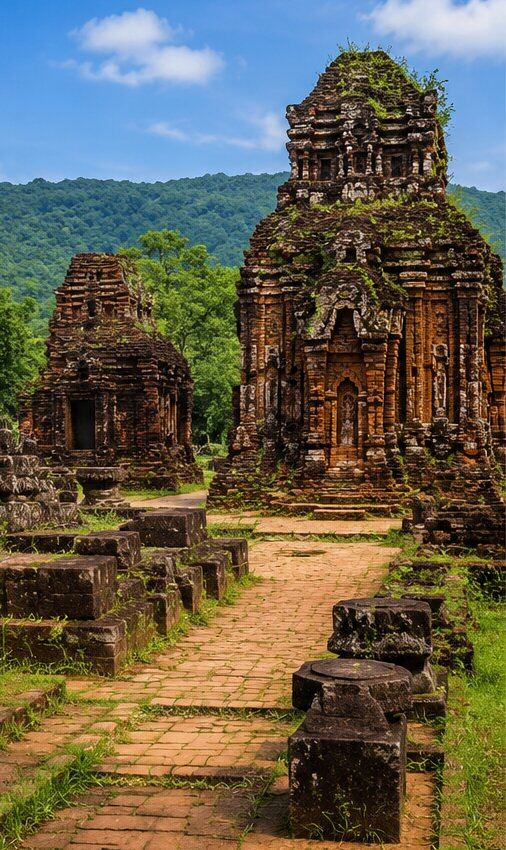
Mỹ Sơn Sanctuary is located in Duy Phú commune, Duy Xuyên district, 70 km southwest of Da Nang — now part of Da Nang. This is a complex of Champa temple towers built continuously from the 4th to the 13th century, serving as the most important religious and political center of the ancient Champa kingdom. Recognized by UNESCO as a World Cultural Heritage site in 1999, Mỹ Sơn originally had over 70 structures, but currently only about 20 relics remain after the bombing of the 1969 war. The tower groups are named after the letters A, B, C, D, E, F, G, H — each tower worships the Hindu god Shiva, built with a dry-stacked brick technique that archaeologists have not yet fully explained. Within the relic site, there is a stage for Apsara Champa dance performances — a traditional dance reconstructed from the bas-reliefs on the towers.
Things to do:
Cù Lao Chàm is a cluster of 8 islands located 18 km from Cửa Đại (Hội An), forming the core area of the Cù Lao Chàm – Hội An World Biosphere Reserve recognized by UNESCO in 2009. The largest island is Hòn Lao, with Bãi Làng and Bãi Hương ports, home to approximately 3,000 residents. Cù Lao Chàm is famous for being a 'no plastic bag island' since 2009 – a pioneering policy in Vietnam, where visitors are required to use reusable items. The sea around the island has diverse coral reefs with over 270 species, which can be admired by diving close to the shore. Visitors often take a 1-day tour from Hội An: 20-minute speedboat ride, swimming at Bãi Chồng – Bãi Xếp beach, snorkeling to see coral, eating steamed seafood with beer at Bãi Hương, then returning in the afternoon. The island also has the ancient Chùa Hải Tạng and the Bà Yến temple – the Sea Goddess of fishermen.
Things to do: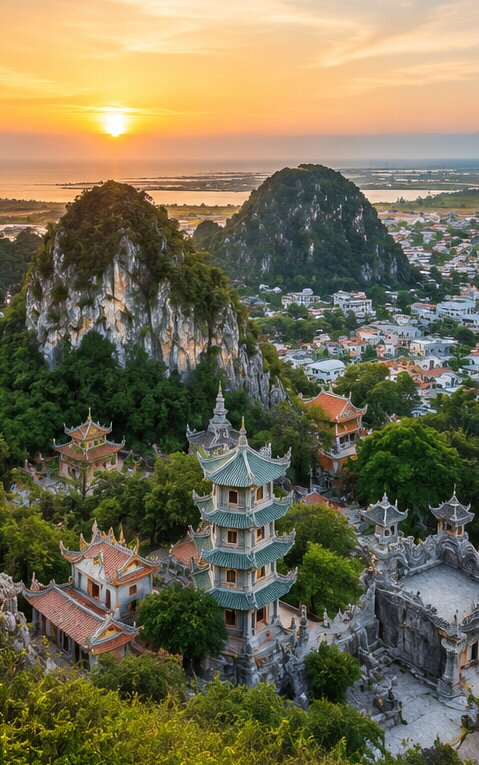
Ngũ Hành Sơn (Núi Non Nước) is a cluster of five limestone mountains rising amidst the coastal sand plain, 8 km southeast of Đà Nẵng city center. The five mountains include Thuỷ Sơn (the largest), Mộc Sơn, Hoả Sơn, Kim Sơn, and Thổ Sơn — symbolizing the five elements Metal, Wood, Water, Fire, Earth. The complex was classified as a Special National Relic in 2018. Thuỷ Sơn mountain is the main attraction with a system of large caves (Huyền Không, Vân Thông, Tàng Chơn), ancient pagodas (Tam Thai built in 1825 during King Minh Mạng's reign, Linh Ứng), and Vọng Giang Đài peak overlooking Mỹ Khê – Non Nước beach. At the foot of the mountain is the famous 400-year-old Non Nước stone carving village – where Buddha statues and artistic sculptures are produced and exported worldwide.
Things to do:
Sơn Trà Peninsula is located immediately northeast of Da Nang city center, 5 km from Mỹ Khê beach. Its area of 4,439 ha includes Sơn Trà Nature Reserve — home to approximately 1,300 rare red-shanked douc langurs (Pygathrix nemaeus) listed in the Vietnam Red Book and by IUCN. On the peninsula is the new Linh Ứng Pagoda (inaugurated in 2010) with a 67 m tall stone statue of Quan Âm Buddha — the tallest Quan Âm Buddha statue in Vietnam, attracting Buddhist pilgrims from all over. The 30 km circular road around the peninsula winds through primary forest, offering views of the sunrise at Mũi Nghê and sunset at đỉnh Bàn Cờ. Vịnh Tiên Sa and bãi Bụt on the south of the peninsula have clear seawater, suitable for coral diving. This area also features Tiên Sa Port — the largest seaport in Central Vietnam and the (former) Da Nang military airport.
Things to do:According to Resolution 202/2025/QH15, the new Da Nang city will be merged from the old Da Nang and Quảng Nam province. Effective from July 1, 2025. Hoàng Sa will remain a special zone directly under the city.
11,859.59 km² with a population of 3,065,628 people. The new Da Nang will be the second largest centrally-governed city in the country after Ho Chi Minh City.
No. Both Phố cổ Hội An (UNESCO World Heritage Site 1999) and Thánh địa Mỹ Sơn (UNESCO 1999) now belong to the new Da Nang city — creating a dense cluster of UNESCO heritage sites for the city.
Approximately 770 km. By plane: 1h20 (fastest, many flights all day). By SE/TN train: about 16 – 18 hours. By car via National Highway 1A and Cao Bồ – Cam Lộ – La Sơn – Hoà Liên expressway: about 13 – 14 hours.
Approximately 970 km. By plane: 1h25 (fastest). By train: 16 – 18 hours. By car: approximately 17 – 18 hours — not recommended for same-day travel.
Yes. Cable car is the only way to get to Bà Nà — 6 cable car lines in total transport visitors from the foot of the mountain to the 1,487 m summit. The entrance ticket including cable car is approximately 950,000 VND/adult (2026), free for children under 1 m.