Ninh Bình Province
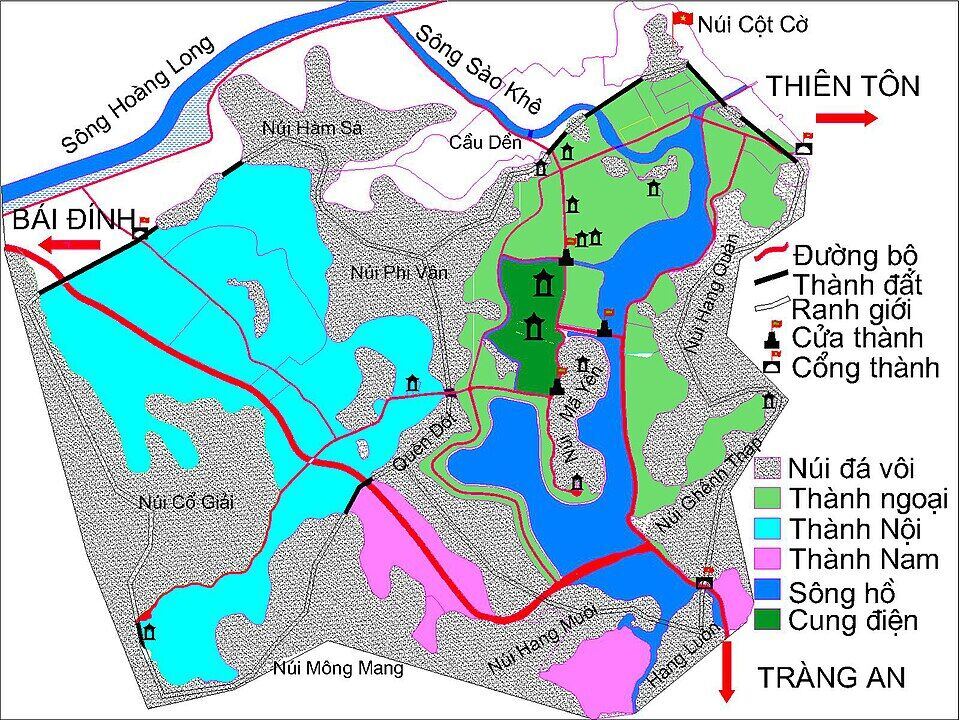
Hoa Lư Ancient Capital — magnificent Tràng An and Tam Chúc Pagoda
Northern Vietnam · Red River Delta
Hoa Lư Ancient Capital — magnificent Tràng An and Tam Chúc Pagoda
Northern Vietnam · Red River Delta
Ninh Bình was newly established according to Resolution 202/2025/QH15 based on the merger of the former Ninh Bình province and Hà Nam province. With an area of 3,942.62 km² and a population of 4,412,264 people, the province is located at the southern gateway of the Red River Delta. The former Ninh Bình owned the Tràng An Scenic Landscape Complex — Southeast Asia's first and only UNESCO World Cultural and Natural Mixed Heritage Site (2014), including Tràng An, Tam Cốc – Bích Động, Hoa Lư Ancient Capital, Hoa Lư primeval forest, and Bái Đính Pagoda. Hà Nam contributed Tam Chúc Pagoda — a pagoda situated amidst a lake and rocky mountains, dubbed 'the largest in the world', along with Liễu Đôi cultural land and Thanh Hà embroidery. The administrative center is located in Ninh Bình city, 93 km from Hanoi.
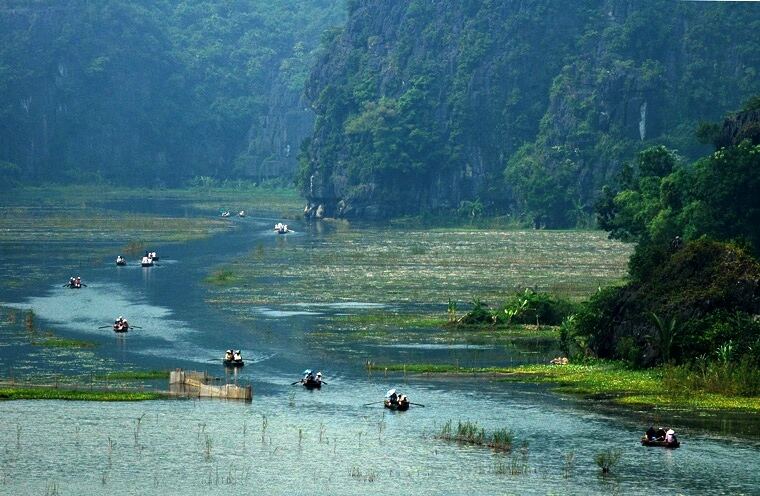
The Tràng An Scenic Landscape Complex is located in Hoa Lư and Gia Viễn districts, 7 km from Ninh Bình city center. Recognized by UNESCO as a Mixed Cultural and Natural World Heritage Site in 2014 — this is the first and only mixed heritage site in Southeast Asia, and also Vietnam's 8th UNESCO heritage site. The complex covers 12,252 ha and includes the Tràng An ecological area, Tam Cốc – Bích Động tourist area, Hoa Lư ancient capital, and Hoa Lư special-use forest. Visitors sit on boats rowed by locals using their feet (a traditional rowing profession) weaving through 12 caves piercing limestone mountains, with rice fields and towering cliffs on both sides. The Tràng An landscape was chosen as the setting for the Hollywood film Kong: Skull Island (2017) — making Ninh Bình globally famous.
Things to do: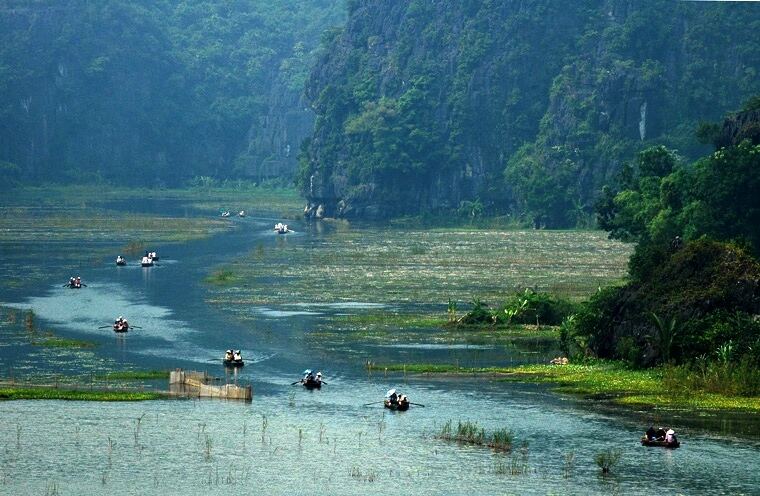
Tam Cốc – Bích Động is located in Ninh Hải commune, Hoa Lư district, 9 km from Ninh Bình city center. 'Tam Cốc' means three caves: Hang Cả (127 m long), Hang Hai (60 m long), and Hang Ba (46 m long) — three rock caves piercing mountains that visitors glide through by boat along the Ngô Đồng River. On both banks are vast rice fields and majestic limestone mountains — creating a vivid ink wash painting, dubbed 'Ha Long Bay on land'. From the boat dock, visitors take a boat trip for about 2 hours through the three caves, along the river admiring the rice fields (golden season in May – June) or young rice (green season in February – March). 2 km away is Bích Động Pagoda — 'nam thiên đệ nhị động' (second most beautiful cave in the southern sky) consisting of three pagodas built on the rock mountain: Hạ, Trung, Thượng.
Things to do: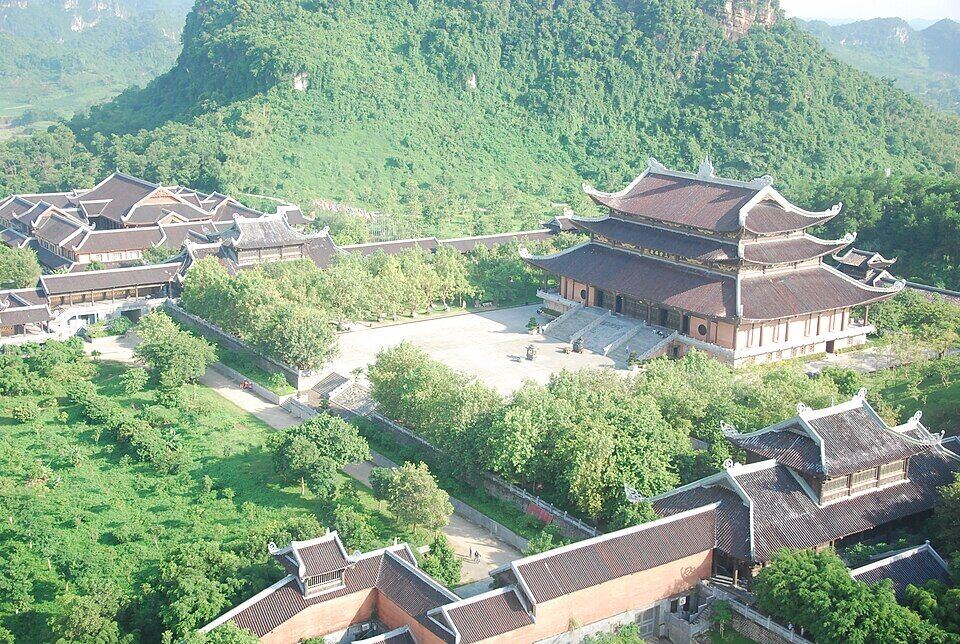
Bái Đính Pagoda is located in Gia Sinh commune, Gia Viễn district, within the Tràng An Scenic Landscape Complex. The complex consists of two parts: the ancient Bái Đính Pagoda (11th century, where Zen Master Nguyễn Minh Không practiced Buddhism) and the new pagoda area inaugurated in 2010, covering 700 ha — the largest pagoda in Southeast Asia with many records: a 100-ton bronze Shakyamuni Buddha statue, the longest Arhat corridor in Asia with 500 statues (3 km), a 36-ton bronze bell tower, and the largest Ngọc Well in Vietnam. The architecture combines traditional Vietnamese and grand East Asian pagoda styles. Visitors need 2 – 3 hours to explore by electric car and on foot. Bái Đính Pagoda is a popular starting point before taking a Tràng An boat trip.
Things to do:
Chùa Tam Chúc is located in Ba Sao commune, Kim Bảng district (former Hà Nam, now part of Ninh Bình province), 60 km from Hà Nội. With a total planned area of 5,100 ha (including a lake, rocky mountains, and the temple complex), it is considered the largest temple in the world by area. The temple is situated amidst Tam Chúc lake, covering 600 ha and surrounded by limestone mountains, creating a beautiful and picturesque landscape. Visitors can take a boat from the pier across the lake for about 15 minutes to reach the central temple area, or use an electric car. Architectural highlights include: điện Tam Thế (three stories, 39 m high), điện Pháp Chủ with a 150-ton bronze statue of Buddha Thích Ca, and chùa Ngọc on the mountaintop. Each hall features natural stone bas-reliefs weighing hundreds of tons, depicting the history of Buddhism. In 2019, Tam Chúc hosted the United Nations Vesak Day — the world's largest Buddhist event.
Things to do: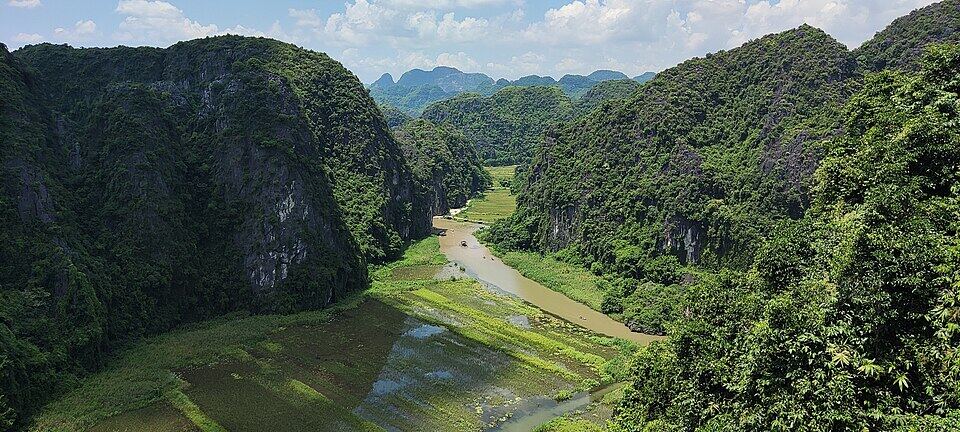
Hang Múa is located in Ninh Xuân commune, Hoa Lư district, 2 km from Tam Cốc. The name 'Hang Múa' (Dancing Cave) is said to originate from the legend that King Trần Thái Tông had his concubines perform dances and songs in the cave. The main attraction today is not the cave itself, but the stone staircase leading up to the peak of Ngoa Long mountain — 486 winding stone steps on the limestone hillside, resembling a 'miniature Great Wall'. At the top are statues of a dragon and Quan Âm, with a 360° panoramic view of the Tam Cốc rice fields, Ngô Đồng river, and vast limestone mountains — voted by international tourists as one of the most beautiful photo spots in Southeast Asia. The climb takes 15 – 20 minutes, is quite steep but has handrails. The afternoon from 3 PM – 5 PM is the ideal time for photos with golden sunlight.
Things to do: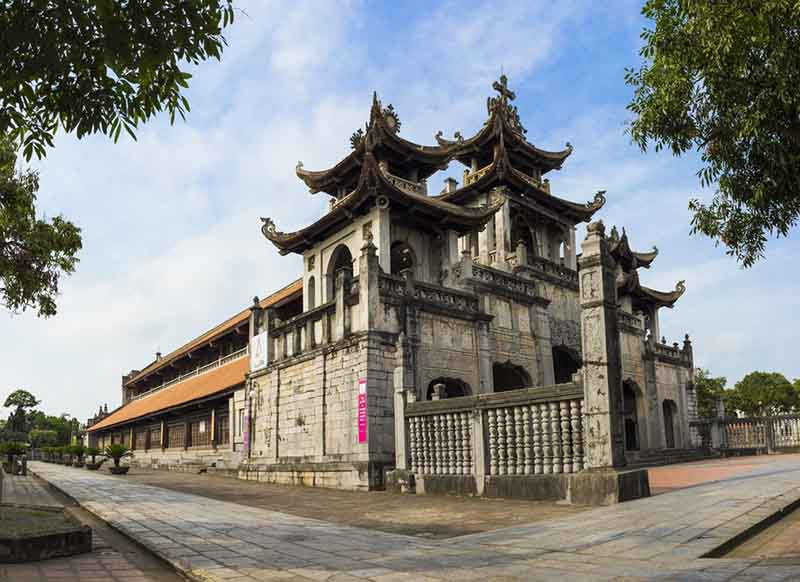
Phát Diệm Cathedral is located in Phát Diệm town, Kim Sơn district, 28 km southeast of Ninh Bình City. The complex was designed and built by Father Trần Lục (Cụ Sáu) from 1875 to 1899 — entirely of stone and ironwood, combining Vietnamese pagoda and temple architecture with Western Catholic church design. This is a unique religious architectural complex in the world: the main church (Phương Đình) is 25 m high, resembling a Northern Vietnamese communal house with a curved roof and ironwood columns, but inside is a sanctuary with a Gothic-style altar. The complex includes the main church, 4 small stone churches, Phương Đình pond covering 4,000 m², and a monolithic stone statue of Christ. The Kim Sơn area is also the most populous Catholic region in Northern Vietnam with over 120 churches of various sizes.
Things to do:According to Resolution 202/2025/QH15, the new Ninh Bình was merged from the former Ninh Bình province and Hà Nam province. Effective from July 1, 2025.
Tràng An Scenic Landscape Complex is a World Mixed Cultural and Natural Heritage Site — the highest and only type of heritage site in Southeast Asia. Recognized by UNESCO in 2014.
After the merger, Tam Chúc Pagoda (Kim Bảng, former Hà Nam) belongs to the new Ninh Bình province. It is 25 km from Ninh Bình city and 60 km from Hà Nội.
Approximately 93 km — about 1h30 by car on the Cầu Giẽ – Ninh Bình expressway. 2h30 by train. You can combine a visit to Tam Chúc Pagoda (former Hà Nam, 60 km from HN) before entering Ninh Bình.
Both involve boat trips through caves, but Tràng An has more caves (12 caves, 3 hours), a more pristine landscape, and can be visited year-round. Tam Cốc (3 caves, 2 hours) is most beautiful during the ripe rice season (May – June), with views of Hang Múa. Ideally, visit both — it takes a total of 1 day.
It has 486 stone steps, quite steep but with iron handrails on both sides. Climbing takes 15 – 20 minutes. It is not suitable for the elderly, infirm, or young children. You should wear sports shoes, bring water, and avoid climbing during the hottest hours.