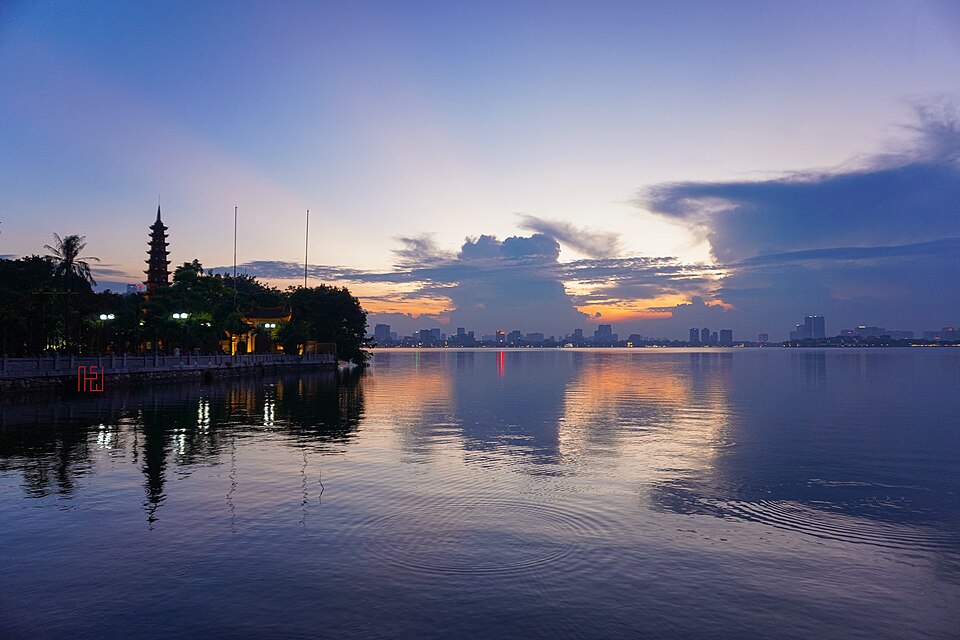
Hà Nội Province
The thousand-year-old capital of civilization — Hoàng thành, old quarter, and hồ Gươm
Northern Vietnam · Red River Delta
The thousand-year-old capital of civilization — Hoàng thành, old quarter, and hồ Gươm
Northern Vietnam · Red River Delta
Hà Nội is the capital of the Socialist Republic of Vietnam, maintaining its administrative boundaries according to Resolution 202/2025/QH15 (no mergers). With an area of 3,358.60 km² and a population of 8,435,660 people, it is the second most populous city in the country after TP.HCM. Hà Nội has a history of over 1,000 years since King Lý Thái Tổ moved the capital from Hoa Lư to Thăng Long in 1010. The city boasts a vast treasure trove of heritage: Hoàng thành Thăng Long — UNESCO World Cultural Heritage (2010), Văn Miếu – Quốc Tử Giám (1070), hồ Hoàn Kiếm with tháp Rùa and đền Ngọc Sơn, the 36-street old quarter, Lăng Chủ tịch Hồ Chí Minh, chùa Một Cột, and the French-architecture Nhà hát Lớn. Hà Nội's cuisine is among the most refined in Vietnam with phở Hà Nội, bún chả, bánh mì, and chả cá Lã Vọng. Hà Nội is also Vietnam's main international gateway with Nội Bài airport.
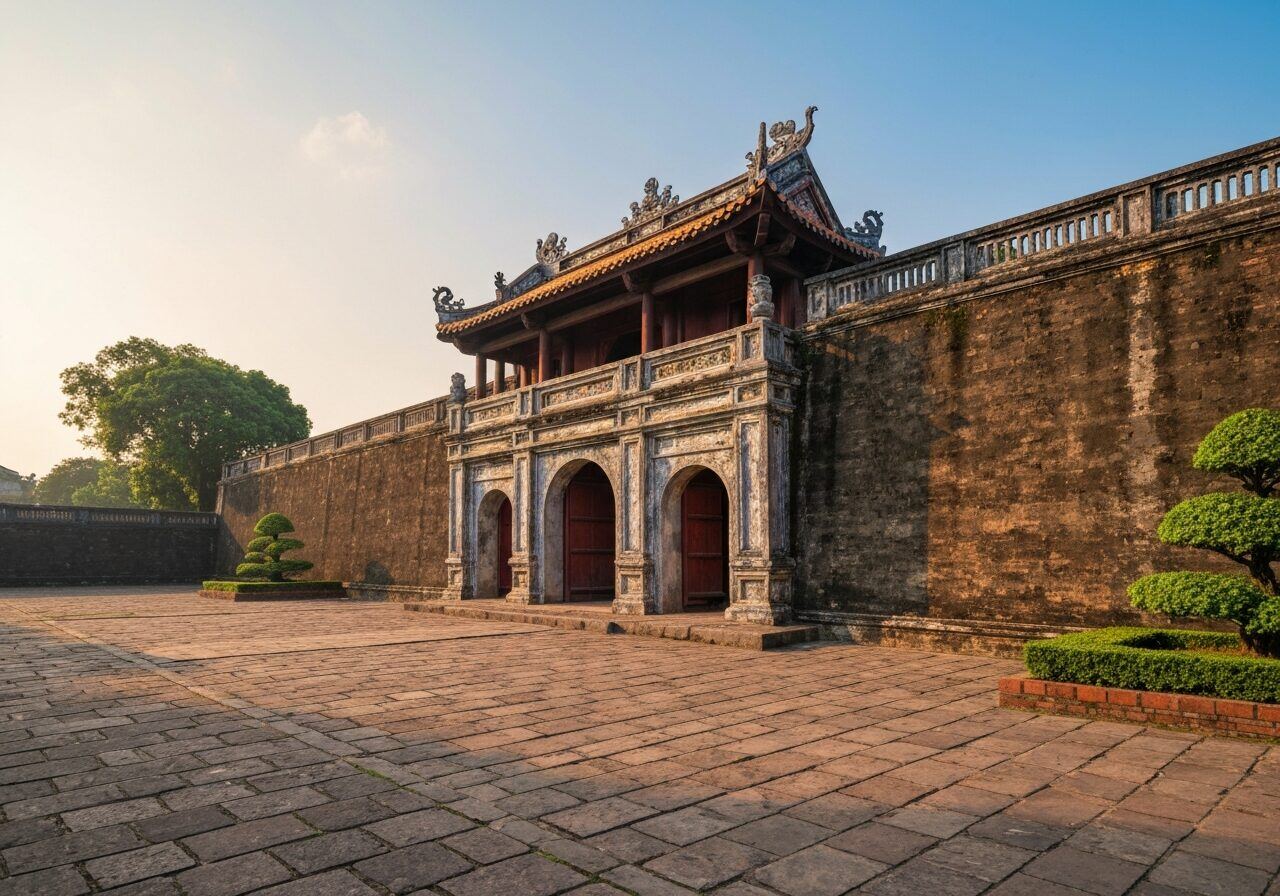
Thang Long Imperial Citadel is located at 18 Hoang Dieu, Ba Dinh district — Vietnam's continuous political center for 13 centuries from 1010 to 1810. Recognized by UNESCO as a World Cultural Heritage site in 2010. The complex includes: Doan Mon (main southern gate, 15th century), Hau Lau (rear palace pavilion, Nguyen dynasty architecture), Kinh Thien Palace (palace foundation with original 15th-century stone dragon balustrade), Hanoi Flag Tower (1812, 33 m high — city symbol), and the 18 Hoang Dieu archaeological site — where multiple layers of relics from the Dai La period (7th century) through Ly, Tran, Le, Nguyen dynasties have been discovered. D67 Command Bunker — where the Politburo and Central Military Commission directed the Ho Chi Minh Campaign in 1975 — is also within the complex.
Things to do: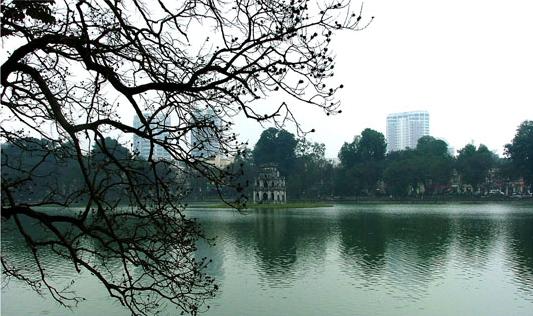
Hoan Kiem Lake (Ho Guom) is located in the center of Hoan Kiem district, covering 12 ha — the heart and symbol of Hanoi. The name 'Hoan Kiem' is associated with the legend of King Le Loi returning the sword to the golden turtle after expelling the Ming invaders in the 15th century. In the middle of the lake is Turtle Tower (1886) — an image printed on many Hanoi logos and symbols; to the north of the lake is Ngoc Son Temple (1865) connected to the mainland by the red-painted The Huc Bridge. The 36-street Old Quarter (Hang Dao, Hang Bac, Hang Ma, Hang Buom...) extends from the northern bank of the lake, with each street specializing in selling a particular item since feudal times. On weekends, the pedestrian streets around the lake and Ta Hien street (Beer Street) are vibrant — visitors drink sidewalk 'bia hoi', watch Thang Long water puppets, and buy souvenirs at the Hang Dao night market.
Things to do: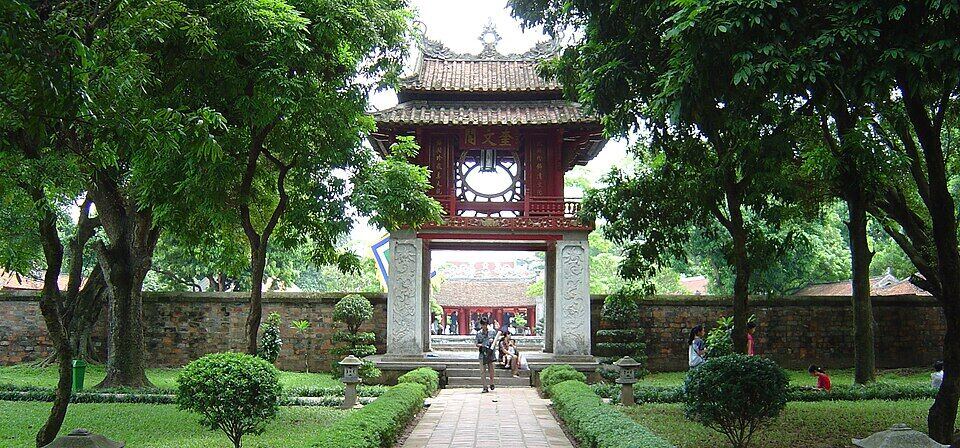
Văn Miếu – Quốc Tử Giám is located on Quốc Tử Giám street, Đống Đa district. Văn Miếu was built by King Lý Thánh Tông in 1070 to worship Confucius; Quốc Tử Giám (1076) was Vietnam's first university — where talents for the country were trained for 700 years. The complex, covering 54,331 m², consists of 5 consecutive courtyards: Đại Trung Môn, Khuê Văn Các (1805, symbol of Hanoi), Giếng Thiên Quang, 82 Doctors' steles (engraving the names of 1,307 Doctors from 1484 to 1780 — UNESCO World Documentary Heritage 2010) and Đại Bái Đường. Khuê Văn Các — a two-story, eight-roofed pavilion, a symbol of reaching for knowledge — was chosen as the official symbol of Hanoi. During every exam season, students come to rub the heads of the turtles carrying the steles for good luck — a familiar custom of Hanoians.
Things to do: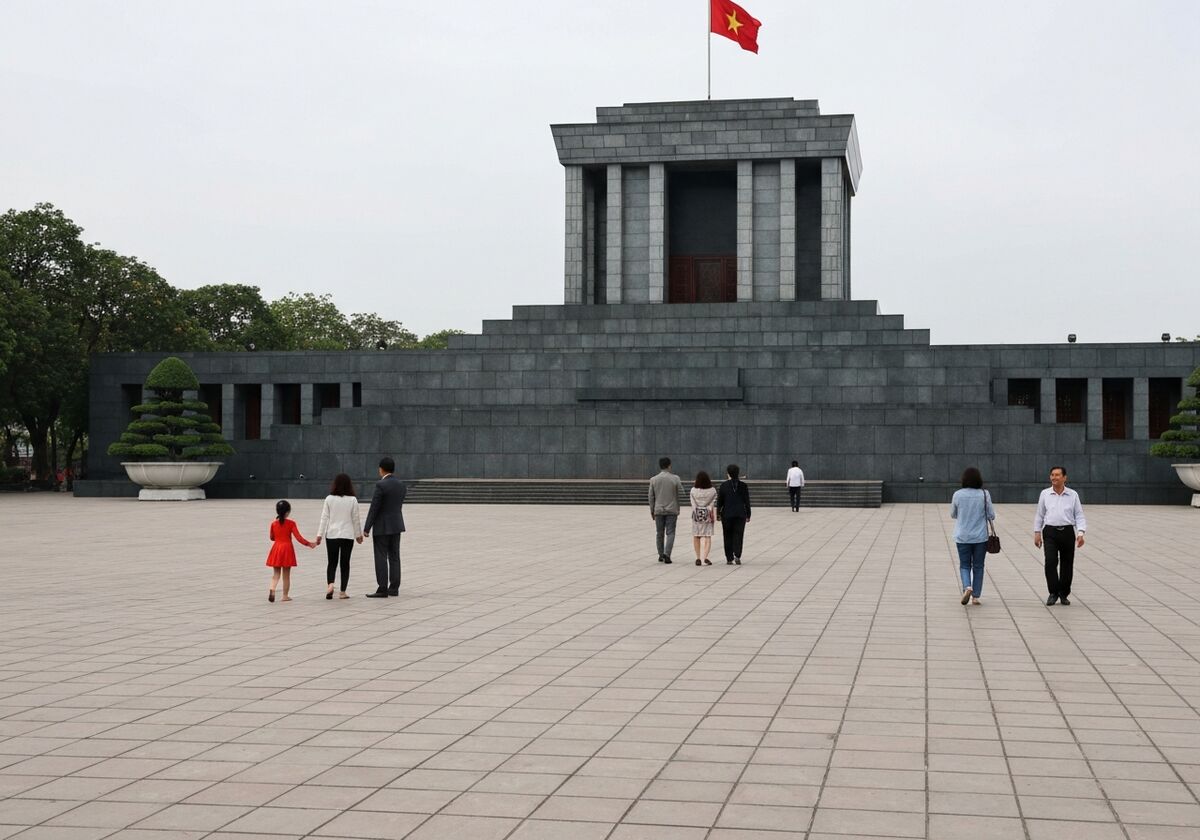
The Hồ Chí Minh Mausoleum complex is located in Ba Đình Square — where President Hồ Chí Minh read the Declaration of Independence giving birth to the Democratic Republic of Vietnam on September 2, 1945. The Mausoleum was built from 1973 to 1975 with gray granite, inside preserving the body of Uncle Hồ — people from all over the country queue to visit Uncle Hồ every morning (except Mondays, Fridays and 2 months for maintenance/year). Around the mausoleum are the Presidential Palace, Uncle Hồ's stilt house (where Uncle Hồ lived and worked from 1958 to 1969), Uncle Hồ's fish pond, mango garden, and Hồ Chí Minh Museum. 200 m from the mausoleum is Chùa Một Cột (Diên Hựu, 1049) — a small pagoda on a single stone pillar in the middle of a lotus pond shaped like a flower, a unique architecture built by King Lý Thái Tông according to his dream of the Goddess of Mercy sitting on a lotus pedestal.
Things to do: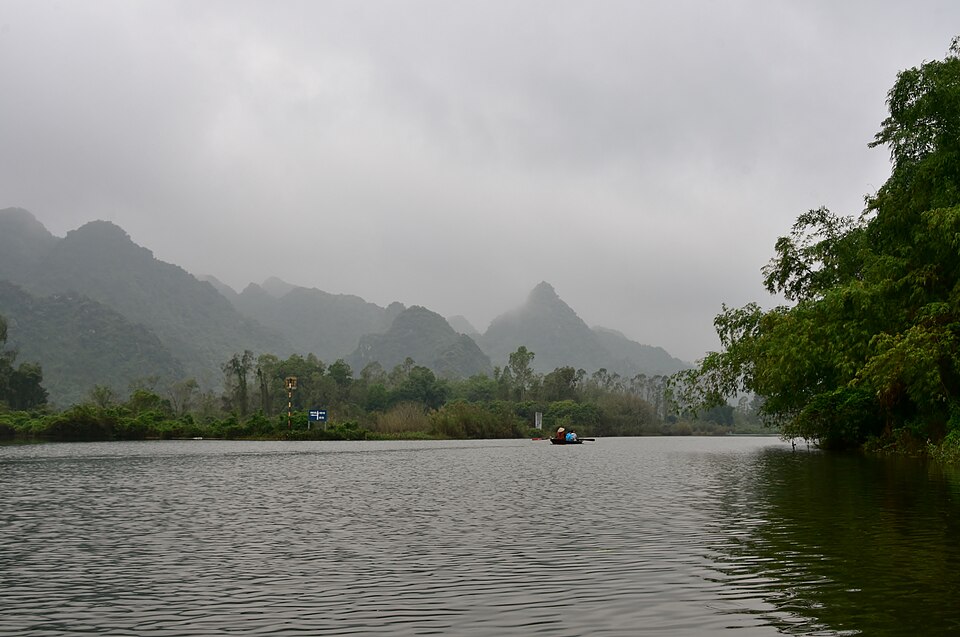
Chùa Hương (Hương Sơn) is located in Hương Sơn commune, Mỹ Đức district, 65 km southwest of central Hanoi. This is a complex of temples, pagodas, and caves stretching across the Hương Sơn limestone mountain range — comprising dozens of pagodas, temples, and hermitages, among which the most important is động Hương Tích (chùa Trong) — which Chúa Trịnh Sâm inscribed 'Nam Thiên đệ nhất động' (the most beautiful cave in Southern Heaven) in 1770. The Chùa Hương festival lasts from the 6th day of the 1st lunar month until the end of the 3rd lunar month (about 3 months) — it is the largest pilgrimage festival in the Northern region with 1 – 1.5 million visitors. Visitors take a boat ride on suối Yến, 4 km long, through rice fields and limestone mountains, then climb the mountain or take a cable car up to động Hương Tích. The scene of boats on suối Yến with limestone mountains on both sides is an iconic image of Hanoi tourism.
Things to do: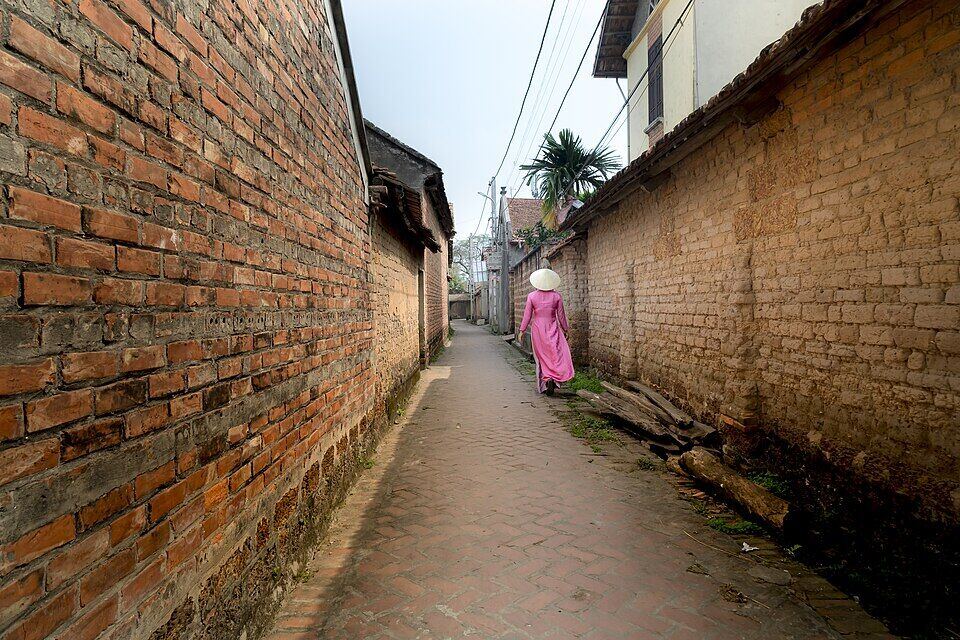
Làng cổ Đường Lâm is located in Đường Lâm commune, Sơn Tây town, 44 km west of central Hanoi. This is the first ancient village in Vietnam recognized as a National Relic in 2005 — the most intact ancient Vietnamese village in the Northern region with characteristic centuries-old laterite (đá ong) house architecture. The village consists of 5 hamlets: Đông Sàng, Cam Thịnh, Mông Phụ, Đoài Giáp, Cam Lâm — with ancient village gates, đình Mông Phụ (1684), ancient wells, laterite-paved paths, and dozens of ancient houses 200 – 400 years old. Đường Lâm is the homeland of two kings: Phùng Hưng (Bố Cái Đại Vương, 8th century) and Ngô Quyền (victory at Bạch Đằng 938 — ending 1,000 years of Northern domination). Visitors can cycle around the village, eat spit-roasted pork, kẹo dồi, tương, chè lam — village specialties.
Things to do:No. Hanoi will retain its administrative boundaries according to Resolution 202/2025/QH15 — it is the capital of the Socialist Republic of Vietnam.
UNESCO World Cultural Heritage (2010) — a continuous center of power for 13 centuries from 1010 to 1810. Located at 18 Hoàng Diệu, Ba Đình district.
30 km — about 45 minutes by taxi, about 1 hour by bus 86. There is the Nhật Tân – Nội Bài expressway. Grab/Be costs about 250,000 – 350,000 VNĐ.
Autumn (October – November) — cool weather, fragrant milk flowers, falling yellow leaves. Spring (February – March) with blooming peach blossoms. Avoid June – August (hot 38 – 40°C) and January – February (cold and humid 10 – 15°C).
Phở Bát Đàn (49 Bát Đàn), Phở Thìn Bờ Hồ (13 Lò Đúc), Phở Lý Quốc Sư (10 Lý Quốc Sư), Phở 10 (10 Lý Quốc Sư) — all are famous long-standing restaurants.
Festival season: January – March of the lunar calendar (very crowded). Quiet season: October – November. Avoid the 1st – 6th days of Tết (overcrowded). Take a 1-hour boat ride on Yến stream + hike or cable car. 65 km from Hanoi, 1h30 by car.